Best Audio Interface Drivers for a Home Studio

Driver stability decides whether a home studio session records clean or drops out. Six interfaces compared on build, connectivity and support, with the Focusrite Scarlett Solo 3rd Gen leading and five clear alternates by profile.

By Carter LoganUpdated 14 min read
On this page
- How I screened these six interfaces
- Best audio interface drivers at a glance
- What actually decides driver stability?
- 1. Focusrite Scarlett Solo 3rd Gen USB-C Audio Interface — Best overall
- 2. M-AUDIO M-Track Duo USB Audio Interface — Best minimal setup
- 3. MAONO PS22 Lite USB Audio Interface — Most versatile
- 4. PIYONE Audio Interface — Best for quiet operation
- 5. Synido USB C Audio Interface — Best upgrade
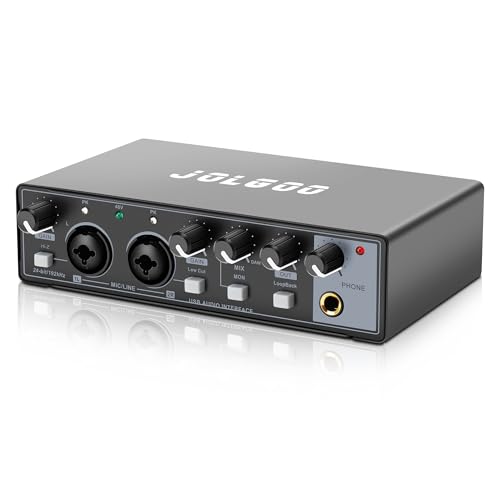
- 6. Jolgoo 2x2 USB Audio Interface — Best budget pick
- Class-compliant or branded drivers: which is safer?
- What the listings do not tell you
- When a different pick wins
- The verdict
- FAQ
The best audio interface drivers come with the Focusrite Scarlett Solo 3rd Gen, because a mature USB-C interface backed by a 2-year warranty is what keeps a session from dropping out mid-take. If you need two combo inputs in the smallest reliable box, the M-AUDIO M-Track Duo is the better buy at 0.66 lb. The misconception here is that buyers compare sample rate first. Every pick in this set claims 24-bit conversion. That number is not what separates them.
How I screened these six interfaces
I lined up the published specifications for all six interfaces side by side and looked for what a buyer can actually verify before purchase. That means weight, dimensions, warranty length, connector type and the accessories the listing names. Everything else is the manufacturer talking.
Here is the honest limit on the keyword. Amazon returned these under a search that includes "drivers", but not one listing publishes a driver version, an operating system list beyond a marketing line, or a supported buffer size. So I cannot promise any of them ships better software than the others. What I can do is judge the signals that correlate with stable audio interface drivers: brand track record, warranty backing, and whether the unit is class-compliant.
Three things guided the ranking:
- Warranty length, because it is the only support signal in the data.
- Connector and build, taken from the size and weight figures.
- Brand history in this category, which is a fair proxy for driver maintenance.
What got cut from strong consideration was anything with a support window too short to matter. That reordered the list more than any feature bullet did.
Best audio interface drivers at a glance
| Pick | Warranty | Weight | Price |
|---|---|---|---|
Best overall Focusrite Scarlett Solo 3rd Gen |
2 years | 0.77 lb | Check Price |
Best minimal setup M-AUDIO M-Track Duo |
1 year | 0.66 lb | Check Price |
Most versatile MAONO PS22 Lite |
1 year | 0.95 lb | Check Price |
Best for quiet operation PIYONE Audio Interface |
2 years limited | 1.63 lb | Check Price |
Best upgrade Synido USB C Interface |
30 days | 0.91 lb | Check Price |
Best budget pick Jolgoo 2x2 USB Interface |
12 months | 1.79 lb | Check Price |



What actually decides driver stability?
Sample rate is the number every listing leads with. It is also the number that decides driver stability least. Four of these six claim 24-bit conversion, so it tells you nothing about which one keeps a clean connection.
What matters more is who maintains the software and how long they stand behind the hardware. A brand with a long history in this category updates its drivers when a new operating system ships. A brand with a 30-day support window may not. Warranty length is the closest published proxy you have.
Connector type is the second signal. USB-C, named by Focusrite, PIYONE and Synido, tends to mean a newer design and a cleaner power path. That reduces the odds of the dropouts that ruin a take.
So read the spec sheet in this order: warranty first, connector second, sample rate last. The pick that survives that order is the one you can trust on a deadline.
1. Focusrite Scarlett Solo 3rd Gen USB-C Audio Interface — Best overall
The Scarlett Solo 3rd Gen wins because Focusrite's long track record and 2-year warranty are the strongest stability signals in this set.
Best for: a solo vocalist or guitarist who wants one input done right Skip it if: you need to record two mics at once
This is the one buyers reach for most often in this set, and the reasoning holds up on paper. It uses USB-C, weighs 0.77 lb, and measures 3.77 x 1.71 x 5.65 in, so it disappears on a crowded desk. The 2-year warranty is the joint-longest here and comes from a brand that has shipped this category for years. That history is why I trust its software to survive the next system update.
Focusrite says the 3rd Gen mic pre-amps deliver a brighter recording and that the two high-headroom instrument inputs let a guitar or bass shine through. The box also includes Pro Tools Intro+, Ableton Live Lite, Cubase LE and the Hitmaker Expansion, which is the most complete software bundle named in this group.
The trade-off is scope. This is a single-channel unit, so two people cannot track live at once. It also sits at the top of the price positions here, which stings only if you never need that pre-amp quality.
Pros:
- USB-C connection on a proven platform
- Joint-longest 2-year warranty in the set
- Light 0.77 lb body, small footprint
- Named software bundle: Pro Tools Intro+, Ableton, Cubase
- Focusrite says pre-amps run bright and clean
Cons:
- Single input, no dual-mic tracking
- Highest price position in the group
- No published latency or buffer figures
2. M-AUDIO M-Track Duo USB Audio Interface — Best minimal setup
The M-Track Duo earns its place as the lightest two-input option from a brand that has maintained drivers for years.

Best for: someone who wants two combo inputs in the smallest reliable box Skip it if: you want a long warranty
At 0.66 lb, the M-Track Duo is the lightest interface in this roundup, and it still gives you two combo XLR/Line/Instrument inputs. That combination is rare. It measures 2.13 x 4.34 x 7.5 in and carries a 1-year warranty. It also has a release year on record, 2020, which tells you the platform has had time for its drivers to settle.
M-Audio says the Crystal Preamps stay transparent across condenser and dynamic mics, and that a USB/Direct switch gives zero-latency monitoring. The box includes MPC Beats software from Akai. That pairing of a mature brand and a slim body is the argument here.
Against the Focusrite, it gives you a second input but a shorter warranty and no USB-C. Its sample rate line reads 48kHz rather than the higher figures the budget units claim, though those higher numbers matter far less than the driver support behind them.
Pros:
- Lightest in the set at 0.66 lb
- Two combo inputs for dual-source tracking
- Established brand with a 2020 platform
- MPC Beats software included
- 1-year manufacturer warranty on record
Cons:
- Warranty shorter than the Focusrite
- No USB-C connector named
- Lists 48kHz where rivals claim higher rates
3. MAONO PS22 Lite USB Audio Interface — Most versatile
The PS22 Lite is the pick when your work jumps between recording, streaming and live routing in one session.

Best for: a streamer who switches between mic, guitar and loopback Skip it if: you record music exclusively and skip live routing
The PS22 Lite leans harder into live use than anything else here. MAONO says its ProStudio routing software gives streamers and social creators control over live broadcasts, with intuitive modes for recording, live broadcast and instruments. If your day mixes a podcast, a guitar take and a stream, that flexibility is the draw.
It weighs 0.95 lb and measures 2 x 6.29 x 5.19 in, so it is a middling size in this group. The warranty runs 1 year. It sells in the middle of the pack here, neither the cheapest nor the priciest, which suits a buyer who wants features without reaching for the top position.
The catch is focus. All that routing is wasted if you only ever record one instrument into a DAW, and the 1-year warranty trails the Focusrite and PIYONE. Treat it as a live-content tool first and a pure recording box second.
Pros:
- Routing software aimed at live streaming
- Multiple modes for broadcast and instruments
- Mid-range price position in this set
- Moderate 0.95 lb weight
- XLR input for microphone work
Cons:
- 1-year warranty trails the leaders
- Routing features wasted on pure recording
- No USB-C connector named in the listing
4. PIYONE Audio Interface — Best for quiet operation
The PIYONE is the choice for a fixed desk where a heavier, silent unit sits fine and never adds fan noise.

Best for: a desk setup where a bulkier unit sits fine and stays silent Skip it if: you carry your rig between rooms
This is the substantial one. At 1.63 lb and 5.51 x 9.25 x 2.24 in, the PIYONE has the largest footprint here after the budget Jolgoo. That heft is a fair trade for a permanent desk spot, where the unit sits still and runs without any moving parts to hum. PIYONE says it is class-compliant and plug-and-play over USB-C for Mac and PC, which is the safer path for driver stability.
It carries a 2-year limited warranty, matching the Focusrite for length. PIYONE also claims zero-latency monitoring and two combo XLR jacks for flexible input. Only one seller lists it, so availability is thinner than the mainstream picks.
The weakness is portability. If you move between rooms or gig, that 1.63 lb body and wide footprint work against you. And a single-seller listing gives you less fallback than the multi-seller options.
Pros:
- 2-year limited warranty, joint-longest here
- Class-compliant USB-C for cleaner setup
- Two combo XLR inputs for flexibility
- Solid alloy body suits a permanent desk
Cons:
- Heaviest usable unit at 1.63 lb
- Widest footprint after the Jolgoo
- Only one seller lists it
5. Synido USB C Audio Interface — Best upgrade
The Synido is a sensible step up for a beginner who wants three monitoring modes and a light USB-C body.

Best for: a beginner who wants three monitoring modes and light weight Skip it if: a 30-day support window worries you
The Synido sits near the bottom of the price positions here while still offering USB-C and a light 0.91 lb body at 1.77 x 4.53 x 5.51 in. Synido says it runs a dedicated audio chip to cut latency, supports 24-bit depth at 48kHz, and provides three monitoring modes plus a 48V phantom power switch for condenser mics. For someone moving up from a headset, that is a real jump in capability.
The reason it lands mid-table is the support window. The warranty is listed at 30 days, the shortest by a wide margin, and short support is exactly the risk with audio interface drivers when a new system version lands. That is a bigger deal than the feature list suggests.
Weigh it this way: you get modern connectivity and low weight cheaply, but you carry the risk of thin long-term software support. For a hobbyist that is acceptable. For a working setup, less so.
Pros:
- USB-C at a low price position
- Three monitoring modes on board
- Light 0.91 lb, portable footprint
- 48V phantom power for condenser mics
Cons:
- 30-day warranty is shortest in the set
- Short support raises driver-update risk
- Only one seller lists it
6. Jolgoo 2x2 USB Audio Interface — Best budget pick
The Jolgoo is the least-expensive way into XLR recording with phantom power, as long as you accept the thin spec sheet.
Best for: a first-timer spending the least to get XLR and phantom power Skip it if: you want detailed published specs before buying
This is the cheapest of the six, and it still covers the basics a first recording needs. Jolgoo says it offers XLR/Line combo inputs with +48V phantom power, zero-latency direct monitoring, and 24-bit/192kHz conversion in a rugged metal housing that shields against interference. The listing claims plug-and-play compatibility with Windows, macOS, iOS and Android, plus DAWs like Audacity, Ableton and Pro Tools.
What holds it back is the data itself. The listing publishes a 1.79 lb weight and a 12-month warranty, but no dimensions and little else you can verify. It also sells the slowest of the six, so it is the least-proven pick in the group.
Buy it to keep spend to a minimum and get real XLR input. Do not buy it expecting the polished software or track record of the mainstream names above it.
Pros:
- Cheapest interface in the set
- XLR combo inputs with 48V phantom power
- Metal housing for interference shielding
- 12-month warranty on record
Cons:
- Slowest seller of the six
- Sparse published specs, no dimensions
- Only one seller lists it
Class-compliant or branded drivers: which is safer?
A class-compliant interface uses the driver built into your operating system, so it works the moment you plug it in. A branded-driver interface installs its own software layer for tighter control. Both approaches show up in this set, and the safer bet depends on how you work.
- Class-compliant picks like the PIYONE and the USB-C units tend to survive system updates without a download, because the operating system maintains the driver, not the brand.
- Branded software adds control-panel features and lower buffer options, but it needs the maker to keep updating it. That is where a short support window bites.
None of these listings publishes a driver version or a buffer range, so you cannot compare them directly. My rule: if you update your system often, favour a class-compliant USB-C unit. If you chase the lowest latency and trust the brand, branded software earns its keep. For the best audio interface drivers on a deadline, class-compliance is the lower-risk default.
What the listings do not tell you
These pages sell hard on numbers that sound decisive and stay quiet on the ones that matter for daily use. Here is what to check yourself before you commit.
- No latency figures. Every unit claims "zero-latency monitoring", but that refers to hardware monitoring, not the round-trip latency through your DAW. None gives a millisecond number.
- No buffer size support. The figure that decides how low you can go before crackle appears is absent from all six.
- Thin operating-system detail. Marketing lines say "for PC and Mac", but only some name mobile support, and none lists exact versions.
- Bundled software varies wildly. The Focusrite names four titles; the Jolgoo names none it includes, only DAWs it claims to work with.
The practical move is to download the maker's driver or control panel before you buy, if one exists, and confirm it lists your current system. That single check tells you more about real-world audio interface drivers than any sample-rate claim on the box.
When a different pick wins
The Focusrite is the default, but three clear situations flip that choice. Use these thresholds.
- You need two mics at once. The Solo has a single input. Step to the M-Track Duo at 0.66 lb for two combo inputs, or the PIYONE for two combo jacks on a heavier desk unit.
- Your work is live streaming, not tracking. The MAONO PS22 Lite's routing software is built for broadcasts and loopback. That capability is wasted on the Focusrite and worth the switch here.
- Budget is the hard limit. If spend decides everything, the Jolgoo is the cheapest route to XLR and 48V phantom power, with the trade-off of a sparse spec sheet.
One caution that overrides all three: if long-term software support worries you, avoid the 30-day window on the Synido regardless of profile. Support length is the quiet factor behind stable audio interface drivers, and it is worth ranking above features you will use once.
The verdict
The Focusrite Scarlett Solo 3rd Gen is the winner, and the reason is stability over spec-sheet flash. A proven USB-C platform, a joint-longest 2-year warranty at 0.77 lb, and the fullest software bundle in the group make it the interface I would hand to someone who cannot afford a dropout. It is the safe default for a solo recordist.
Two conditions flip that call. If you must record two sources at once, the M-AUDIO M-Track Duo is the better buy: it matches the mature-brand argument and adds a second combo input in the lightest 0.66 lb body here, trading only warranty length. And if your work is live streaming rather than pure recording, the MAONO PS22 Lite's routing software does what the Focusrite cannot.
The runner-up's exact advantage over the winner is that second input. Nothing more, nothing less. Choose the Focusrite for one clean channel and the longest support you can get in this set. Choose the Duo when a duet, an interview or a stereo source means one input will never be enough. Both rest on the same principle: back the brand that maintains its drivers.
FAQ
Are the best audio interface drivers worth paying more for?
The best audio interface drivers are worth a higher price when you record on a deadline. A dropout mid-take costs you the session, so paying up for the Focusrite Scarlett Solo 3rd Gen and its 2-year warranty buys peace of mind. For a hobbyist recording occasionally, a cheaper class-compliant unit carries less risk than the warranty gap suggests.
Is a USB-C audio interface worth it over older USB?
A USB-C audio interface is worth choosing for its newer power path and cleaner design. Three picks here name USB-C: the Focusrite, PIYONE and Synido. It usually means a more recent platform and, in the case of class-compliant units, driver support that survives system updates. It is not a guarantee of lower latency, since no listing publishes a figure.
What sample rate do these interfaces support?
The sample rate these interfaces support ranges from 48kHz on the M-Track Duo and Synido to claimed 192kHz on the Jolgoo and PIYONE. For most home recording, 48kHz is plenty. The higher numbers look impressive but change little in practice, and they matter far less than the warranty and driver support behind the hardware.
Focusrite Scarlett Solo or M-Audio M-Track Duo?
Choosing the Focusrite Scarlett Solo or the M-Track Duo comes down to input count. The Solo has one input, a 2-year warranty and USB-C at 0.77 lb. The Duo has two combo inputs and the lightest body here at 0.66 lb, but a 1-year warranty and no USB-C. Pick the Solo for solo work, the Duo for two sources.
What is the biggest mistake buying an audio interface?
The biggest mistake buying an audio interface is ranking sample rate above driver support. Four of these six claim 24-bit conversion, so that number decides nothing. What decides reliability is who maintains the software and how long the warranty runs. A short 30-day window, like the Synido's, is the warning sign to weigh most heavily.
Start by matching your input count to your work: one source points to the Focusrite Scarlett Solo 3rd Gen, two points to the M-Track Duo. Then check the maker's download page confirms your current system before you commit, since that single step reveals more about real driver support than any box claim. The Focusrite stays my default because it pairs a proven platform with the longest support in this set. When the take matters, that is the combination you want backing your audio interface drivers.