Best Budget Ham Radio for Kids Who Are Just Starting

Five picks, one real deciding factor: whether an adult holds a licence. A 70W mobile base station leads, a 10W handheld follows, and one screen-equipped toy pair covers the under-tens.

By Carter LoganUpdated 15 min read
On this page
- Best budget ham radio for kids at a glance
- Who actually gets to transmit, and who doesn't?
- How I matched five picks to four kinds of kid
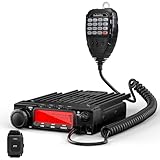
- 1. Radioddity VB70-B VHF Mobile Ham Radio 70W Noise Reduction — Best overall
- 2. KSUN UV-5RM 10W Handheld Ham Walkie — Best for heavy use
- 3. MaxTalker 5RM Ham Radio Handheld Walkie Talkie — Most versatile
- 4. BlueFire Kids Walkie Talkies with Video — Best for families
- 5. Radio Budget Killer Sticker — Best budget pick
- Mobile base station or handheld: which fits a young operator?
- What the listings leave out
- When a different pick wins
- The verdict
- FAQ
The best budget ham radio for kids is the Radioddity VB70-B, a 70W VHF mobile transceiver with 510 programmable channels that a licensed parent can run as a shared home station. If your child needs something portable instead, the KSUN UV110D handheld drops to 10W and runs off a 4000mAh battery. What splits this field isn't wattage or channel count. It's whether anybody in the house holds an amateur licence, because that single fact decides which of these five a child may legally key up.
Best budget ham radio for kids at a glance
| Pick | Power / type | Licence needed? | Price |
|---|---|---|---|
Best overall Radioddity VB70-B VHF Mobile Ham Radio |
70W / 25W / 10W mobile transceiver |
Yes | Check Price |
Best for heavy use KSUN UV-5RM 10W Handheld Ham Walkie |
10W claim handheld |
Yes | Check Price |
Most versatile MaxTalker 5RM Handheld Walkie Talkie |
handheld 2-pack |
Yes | Check Price |
Best for families BlueFire Kids Walkie Talkies with Video |
toy radio 2-pack, 63g each |
No | Check Price |
Best budget pick Radio Budget Killer Sticker |
vinyl decal 3" × 3" |
No | Check Price |


Who actually gets to transmit, and who doesn't?
Here's the part most gift guides skip. Amateur radio transmission requires a licence, and a licence is held by a person, not a household. There is no minimum age for one. Children pass the entry-level exam every year.
But until that certificate exists, a child may listen all they like and may speak on a licensed operator's station under that operator's supervision. That's the arrangement three of these picks assume.
The other two don't need any of it:
- The BlueFire pair is sold as a toy in the kids' electronics category, with direct one-on-one pairing rather than open channels.
- The sticker is a 3" × 3" vinyl decal.
So the honest framing for this whole category is a fork. Licensed adult in the house, and the Radioddity or one of the two handhelds becomes a genuine teaching tool. No licence yet, and the BlueFire pair is what a kid can pick up this afternoon while somebody studies for the exam. Amazon's search results for the best budget ham radio for kids mix both types together without flagging the difference, which is exactly why the modifier here needs judging rather than trusting.
How I matched five picks to four kinds of kid
I built the shortlist around who's holding the radio rather than around specifications, because a spec sheet can't tell you whether a seven-year-old will use something twice and abandon it.
Four profiles, four picks, and one accessory:
- The kid with a licensed parent. A fixed station beats a handheld here. Better audio, more power, more to learn. The Radioddity VB70-B takes this slot on its three power levels and 510-channel memory.
- The teenager studying for the exam. They want something in a pocket that runs all day. The KSUN UV110D claims 24 hours of continuous operation from a 4000mAh cell.
- Two siblings who want a matched set. The MaxTalker 5RM ships as a 2-pack with a speaker mic and a high-gain antenna, so nobody argues over one unit.
- The under-ten who just wants to talk across the garden. The BlueFire pair, 63g each, two units in the box.
The sticker is in the set because it was the cheapest listing that surfaced, and pretending otherwise would be dishonest. It's a 3" × 3" decal for a laptop or a radio case. It's not a radio and I don't rate it as one.
1. Radioddity VB70-B VHF Mobile Ham Radio 70W Noise Reduction — Best overall
The most capable pick here by a wide margin, and the only one built as a permanent station a parent and child can share.
Best for: a licensed adult building a home station a child operates alongside them Skip it if: you want something a kid can carry
Three power levels, 70W, 25W and 10W, give this one a range ceiling nothing else here approaches. That matters for a beginner more than it sounds, because the frustrating part of early radio work is calling and hearing nothing back. Drop to 10W for local practice, climb to 70W when you want distance.
Radioddity says the set carries NRC noise reduction on both receive and transmit, four adjustable squelch levels, and Compander processing to strip background noise. For a child learning to listen through static, cleaner receive audio is the single most useful upgrade in the box. The listing also claims built-in Bluetooth with a wireless PTT included, plus support for standard Bluetooth headsets, which is a genuinely kid-friendly touch: the mic isn't tethered to the desk.
Storage runs to 510 programmable channels with frequency and channel scanning. The LCD offers 32 backlight levels. Warranty is 18 months, the longest published in this set.
The trade-off is format. It's a mobile transceiver, meaning power supply, antenna and a fixed spot. It's also the most expensive pick here, and only one seller lists it.
Pros:
- Three power levels: 70W, 25W, 10W
- 510 programmable channels with scan modes
- 18-month warranty, longest in this set
- Wireless PTT included per the listing
- Noise reduction claimed on transmit and receive
Cons:
- Needs an antenna and power supply, not plug-and-play
- Nothing a child can carry around
- Most expensive pick here
- Only one seller lists it
- No published weight or dimensions
2. KSUN UV-5RM 10W Handheld Ham Walkie — Best for heavy use
The endurance pick: a 4000mAh battery and a claimed 24 hours of continuous operation in a 7.84 oz body.

Best for: a teenager working toward a licence who needs all-day battery Skip it if: nobody in the house holds a licence yet
At 7.84 oz and 4.02 x 1.5 x 2.05 in, this is the only handheld in the set with both weight and dimensions published, which tells you something about how the rest of these listings are written. It fits a jacket pocket.
The claim that earns it this award is stamina. KSUN states a 4000mAh rechargeable cell delivering 24 hours of continuous operation and 120 hours of standby, charged over Type-C. A kid who forgets to dock a radio overnight still finds it working the next afternoon. That's the difference between a hobby and a drawer ornament.
Reception is broad: full-band receive including AM aviation bands, FM broadcast, and ten NOAA weather channels. A young operator can spend months just listening, entirely legally, before ever transmitting. Bluetooth app programming means channel setup happens on a phone rather than through a menu tree, which removes the step where most beginners give up. Feature list adds 256 memory channels, ten squelch levels, A/B band independent operation, CTCSS/DCS and VOX. A customisable side key triggers an SOS alarm.
Against the Radioddity, it gives up power and warranty length: 10W claimed, one year.
Pros:
- 4000mAh battery, 24 hours continuous claimed
- Only 7.84 oz, dimensions published
- App programming over Bluetooth
- Ten NOAA weather channels plus AM air band
- Type-C charging
Cons:
- 10W ceiling against the Radioddity's 70W
- One-year warranty, shorter than the winner's
- Single unit, so a second is a separate purchase
- Only one seller lists it
3. MaxTalker 5RM Ham Radio Handheld Walkie Talkie — Most versatile
A matched 2-pack with a speaker mic and a high-gain antenna, so two kids get identical hardware out of one box.

Best for: two kids who want a matched pair with weather reception Skip it if: you need a published weight before you buy
Count is 2, and that changes the dynamic completely. Two children with matching radios learn faster than two children taking turns, because they can actually work each other rather than waiting for a distant station to answer.
MaxTalker positions the 5RM as an improved take on the UV-5R, with up to 999 channels of storage. That's the largest handheld memory in this set. Multi-band reception covers AM, NOAA weather, UHF and VHF. The listing also claims a one-key frequency copy function that duplicates a frequency without programming, which is the feature I'd expect a beginner to use most in month one. No cable, no software, no lost afternoon.
Range gets help from what the brand describes as a high-gain antenna, an upgraded version of the 771. Each unit runs a 2500mAh battery with a Type-C port on the battery itself, plus a US charger and a speaker mic in the box.
Two honest gaps. Battery capacity is lower than the KSUN's 4000mAh, and no weight or dimensions are published, so pocketability is guesswork. Warranty is listed only as "1" with no unit stated. Also the more expensive of the two handhelds here.
Pros:
- 2-pack, so two operators from one purchase
- Up to 999 channels, most of any handheld here
- Speaker mic and charger included
- One-key frequency copy, no programming cable
- AM, NOAA, UHF and VHF receive
Cons:
- 2500mAh per unit against the KSUN's 4000mAh
- No published weight or dimensions
- Warranty listed without a time unit
- Pricier than the higher-capacity KSUN
4. BlueFire Kids Walkie Talkies with Video — Best for families
The only pick a child can use today with no licence, no exam and no adult supervising the transmit key.

Best for: kids aged 3 to 12 who want to talk across the yard today Skip it if: the goal is real amateur radio practice
Sold in the kids' electronics walkie talkie category, this pink-and-blue pair is aimed at ages 3 to 12, and it's the pick buyers choose most often out of these five by a very large margin. Two units, 63g each, in a gift box.
What makes it interesting rather than just a toy is the screen. BlueFire says each unit carries a built-in HD video display for real-time video chat between the pair, which no other pick here offers. There's a voice changer with four effects: original, child, monster and male. Direct one-on-one pairing, per the listing, keeps the link private with no cross-talk from neighbouring sets. USB-C charging with up to seven days of standby.
For a five-year-old, that combination does the job the other picks can't. It teaches turn-taking, call-and-response, and the basic discipline of listening before speaking, all without an exam. Consider it the on-ramp.
Be clear about what it isn't. There are no bands, no channel memory, no weather reception and no path to licensed operation. Coverage is whatever "long range" means on a toy listing, which is not stated in metres or miles. A child who catches the bug will outgrow it inside a year, and at that point you're buying a second radio.
Pros:
- No licence required, usable immediately
- 2 units at 63g each, easy for small hands
- Video screens, unique in this set
- Four voice-changer effects
- USB-C charging, up to seven days standby
Cons:
- Not an amateur radio and offers no path to one
- No stated range figure anywhere in the listing
- Screens and voice effects add battery drain for no comms benefit
- Outgrown quickly by an interested child
- Only one seller lists it
5. Radio Budget Killer Sticker — Best budget pick
A 3" × 3" white vinyl decal, and the cheapest listing in this set by a wide margin.

Best for: decorating a young operator's laptop or radio case Skip it if: you expected a radio
Let's be straight about what this is. It's a sticker. It appears in searches for the best budget ham radio for kids because the phrase "ham radio" and the word "budget" both sit in its title, and Amazon's matching doesn't care that it belongs in arts and crafts rather than electronics.
Specifications are what you'd expect: 3" × 3", white, count of 1, and a listed weight of 0 g. GENERIC pitches it at amateur radio operators who want to show the hobby off on a laptop, a notebook or a radio case.
There's a small case for it as a stocking-filler alongside one of the four radios above. A kid who's just passed an exam or just got their first handheld will stick it on something. That's the entire use.
It also serves a purpose in this guide. Its presence shows how loosely the search results for this term are assembled, which is the reason a shopper needs to read the category path on any cheap "kids ham radio" result before adding it to a cart. This is the slowest-moving listing of the five by a long way.
Pros:
- Cheapest listing in this set
- 3" × 3" fits a laptop lid or radio case
- Weighs effectively nothing
- Pairs as an add-on with any radio above
Cons:
- Not a radio and cannot transmit or receive
- Sits in arts and crafts, not electronics
- No warranty published
- The slowest-moving pick of the five
Mobile base station or handheld: which fits a young operator?
The instinct is to buy a handheld because kids like portable things. I'd push back on that for a first radio, and here's why.
A handheld gives a beginner the weakest possible version of the hobby: a stubby antenna, low power, and a lot of calls that go unanswered. A fixed station gives them a chair, a proper antenna, a big display and enough output to actually reach somebody. The Radioddity's 70W top setting versus the KSUN's claimed 10W is a real gap in what a child hears back.
The counter-argument is genuine, though:
- Handhelds go to club meetings, hikes and field days, where a beginner meets other operators
- The MaxTalker arrives as a 2-pack, so a kid has somebody to talk to from day one
- The KSUN's 4000mAh cell and 7.84 oz weight make it something a teenager carries without thinking
My split is simple. Under twelve and supervised, the fixed station teaches more. Twelve and up, chasing their own licence, the handheld gets used more often. Both beat a toy for anyone serious about the best budget ham radio for kids question.
What the listings leave out
Reading these five listings side by side, the gaps are as informative as the specifications:
- Frequency coverage in numbers. Bands are named, ranges are not. The Radioddity is described as VHF; the two handhelds claim UHF and VHF. Actual megahertz figures aren't published on any of them.
- Range. Every listing implies distance, none states it. "Long range" and "expand communication range" are marketing, not measurement.
- Weight and size on three of five. Only the KSUN publishes both, at 7.84 oz and 4.02 x 1.5 x 2.05 in. The Radioddity and MaxTalker publish neither.
- Warranty clarity. The Radioddity gives 18 months, the KSUN one year, the BlueFire one year. The MaxTalker's warranty reads simply "1".
- Included accessories. The MaxTalker names a speaker mic and US charger. The Radioddity names an included wireless PTT. What ships with the others is unstated.
Treat those blanks as questions to ask before ordering, not as reasons to walk away. Every listing in this category leaves some of them open.
When a different pick wins
Three thresholds change my answer on the best budget ham radio for kids, and each one is checkable in about ten seconds:
- Nobody in the house holds an amateur licence. Then the Radioddity, KSUN and MaxTalker are all listen-only until that changes. Buy the BlueFire pair for now and study for the exam. That's not a compromise, it's the correct order of operations.
- The child is under about eight. Even with a licensed parent supervising, a 510-channel transceiver is overwhelming. The BlueFire's four voice effects and video screens hold attention where a squelch menu does not.
- Two kids, not one. A single handheld creates a queue. The MaxTalker's count of 2 and included speaker mic solve that in one purchase, and its claimed one-key frequency copy means neither child needs a computer to get set up.
One more flip worth naming. If space is the constraint, and there's no room for a power supply and an external antenna, the Radioddity is simply the wrong shape regardless of how capable it is. The KSUN handheld becomes the default in that scenario, and its 4000mAh battery makes it a comfortable one.
The verdict
The Radioddity VB70-B is my pick for the best budget ham radio for kids, on the assumption a licensed adult is in the room. Three power levels at 70W, 25W and 10W, 510 programmable channels, claimed noise reduction on both receive and transmit, and an 18-month warranty add up to a station a child can grow into over years rather than months. The included wireless PTT and Bluetooth headset support also mean a kid isn't chained to a desk mic, which matters more with young operators than the spec sheet suggests.
Two conditions flip that. If portability is non-negotiable, the KSUN UV110D takes it: 7.84 oz, a 4000mAh battery claiming 24 hours of continuous operation, app programming over Bluetooth, and ten NOAA channels. It gives up power and six months of warranty, and gains a radio that actually leaves the house.
If nobody holds a licence yet, the BlueFire pair is the honest recommendation. Two 63g units, video screens, one-on-one pairing, no exam. It's not amateur radio and I won't pretend otherwise, but it's the pick a seven-year-old uses tomorrow.
The sticker is a sticker. Add it to a radio order, not instead of one.
FAQ
Is a budget ham radio worth it for a child just starting out?
A budget ham radio is worth it for a child if an adult in the house is licensed or studying. Under that condition, the KSUN's 4000mAh battery and ten NOAA channels give months of legal listening practice before any transmitting happens. Without a licence in the household, spend less on the BlueFire toy pair first and see whether the interest sticks.
Does a kid need a licence to use any of these radios?
A kid needs a licence to transmit on the Radioddity, KSUN or MaxTalker, though they may listen freely and may operate under a licensed adult's supervision at that adult's station. There's no minimum age for the entry exam. The BlueFire pair and the sticker require nothing, which is why the toy pair is the immediate-use option here.
How does the KSUN handheld compare to the MaxTalker 2-pack?
The KSUN handheld beats the MaxTalker on battery and transparency: 4000mAh against 2500mAh, a claimed 24 hours of runtime, plus published weight of 7.84 oz and dimensions of 4.02 x 1.5 x 2.05 in. The MaxTalker answers with a count of 2, up to 999 channels, a speaker mic and a high-gain antenna. Two kids, buy the MaxTalker. One kid, the KSUN.
What power output should a first radio have?
A first radio should have power you can turn down as well as up. The Radioddity offers 70W, 25W and 10W, so local practice runs quiet and distant contacts get full output. The handhelds here top out around a claimed 10W. Higher wattage helps a beginner mainly because unanswered calls are what makes new operators quit.
What's the biggest mistake buyers make in this category?
The biggest mistake buyers make is trusting the search results without checking the category. This set of five includes a mobile transceiver, two handhelds, a children's toy and a 3" × 3" vinyl sticker, all surfaced by the same query. Read the category path and the specifications on any cheap listing before ordering, because "ham radio" in a title guarantees nothing.
Start with the licence question, because it decides everything downstream. If somebody in the house is licensed or willing to sit the exam, the Radioddity VB70-B gives a child a real station with 510 channels and enough output to be heard, and 18 months of cover while they learn on it. If not, put the BlueFire pair under the tree, get the exam booked, and upgrade in six months once you know the interest is real. Either way, buy for the child in front of you rather than the hobby you hope they'll have.