Best DC Coupled Audio Interface: Fender Quantum Wins

Hunting a DC-coupled audio interface for modular CV? Only one product in this set publishes that spec. The other four still earn a place on the shortlist, and here is why.

By Carter LoganUpdated 13 min read
On this page
- Best dc coupled audio interface at a glance
- How I screened this shortlist
- What DC-coupling actually buys you
- Which of these picks really does DC-coupling?
- 1. Fender Quantum LT 16 — Best overall
- 2. Universal Audio Volt 2 — Best premium
- 3. Focusrite Scarlett Solo 3rd Gen — Best upgrade
- 4. Arturia AudioFuse X8 OUT — Best minimal setup
- 5. M-Audio M-Track Duo — Best budget pick
- How many inputs do you actually need?
- What the listings do not tell you
- The verdict
- FAQ
The best DC coupled audio interface in this shortlist is the Fender Quantum LT 16, the only pick with published DC-coupled outputs, eight MAX-HD mic preamps and a stated +75 dB of gain across a 16-in, 8-out USB-C chassis. If you do not actually need CV routing to modular gear, the Universal Audio Volt 2 is the better buy: a 1.43 lb desktop box with 24-bit / 192 kHz conversion and the 610 preamp Vintage mode.
Get the DC-coupling question wrong and the failure mode is specific and expensive. You buy an interface that looks the part, patch a cable from an output to a modular CV input, and the signal is AC-coupled: it passes audio but strips the DC voltage that tells an oscillator what pitch to hold. Your sequencer plays melodies at the wrong notes, or nothing at all. The fix is not a driver update. It is a new interface.
Best dc coupled audio interface at a glance
| Pick | I/O | DC-coupled outputs? | Price |
|---|---|---|---|
Best overall Fender Quantum LT 16 |
16-in / 8-out | Yes, stated | Check Price |
Best premium Universal Audio Volt 2 |
2-in / 2-out | Not listed | Check Price |
Best upgrade Focusrite Scarlett Solo 3rd Gen |
2-in / 2-out | Not listed | Check Price |
Best minimal setup Arturia AudioFuse X8 OUT |
0-in / 8-out | Not listed | Check Price |
Best budget pick M-Audio M-Track Duo |
2-in / 2-out | Not listed | Check Price |



How I screened this shortlist
The buyer of a best dc coupled audio interface is not one person. Three profiles show up again and again, and the picks below map to those profiles rather than to a single ranked list.
The first is the hybrid producer with hardware synths, a modular rack, and a DAW that wants to sequence pitch and gate directly. That buyer needs DC-coupled outputs, and only one product here publishes that specification. The Fender Quantum LT 16 earns the top slot for that reader alone.
The second is the desktop producer who typed "dc coupled" into search because a forum post mentioned it, but is really shopping for a solid 2-in / 2-out. Nothing in that person's workflow ever sees a CV cable. The Volt 2, the Scarlett Solo and the M-Track Duo all fit, at three different price positions in this set.
The third is the owner of a Universal Audio Apollo or a Focusrite Clarett who needs extra clean outputs for a summing mixer. The Arturia AudioFuse X8 OUT is a specialty box for that job: eight line outputs, no mic pres, no headphone amp.
Two picks were kept in the list even though their listings do not confirm DC-coupled behaviour. They belong here because most people typing this query would still be better served by them.
What DC-coupling actually buys you
DC-coupling is a hardware property of an interface's output stage. An AC-coupled output uses a capacitor to block direct current, which is fine for audio and wrong for control voltage. A DC-coupled output lets steady voltages pass through unchanged, which is what a modular synth's pitch input needs.
The practical uses are narrow but real:
- Sending pitch (1V/octave) and gate signals from a DAW plugin like VCV Rack or Bitwig's Grid to a Eurorack case.
- Modulating filter cutoff or amp level on a semi-modular synth from an LFO drawn in the DAW.
- Sample-accurate sync between software sequencers and hardware.
If none of those sentences describe your setup, you do not need a DC-coupled interface at all. The tradeoff is worth stating: DC-coupled interfaces are usually larger, heavier and more expensive per output than a standard desktop 2-in / 2-out. Buying one because a Reddit thread said so, when you only record a podcast, is paying for silicon you will never use.
Which of these picks really does DC-coupling?
One. Fender explicitly lists "DC-Coupled Outputs + MIDI I/O" as a feature of the Quantum LT 16, and calls out CV-capable outputs for modular synths. That is the only listing in this set that makes the claim.
The other four interfaces here do not state DC-coupling in their published specifications. That is not the same as saying they are AC-coupled: some brands simply do not document the output stage. If you are considering an interface not on this shortlist, three tests help:
- Search the manufacturer's spec sheet for the phrase "DC-coupled" or "CV outputs".
- Look for language about integrating with modular or Eurorack synths in the marketing copy.
- Check whether the interface appears in the compatibility list of a DAW plugin that sends CV, such as VCV Rack's ES-9 preset list or Bitwig's Hardware CV Out device.
If none of those turn up, assume AC-coupled and move on.
1. Fender Quantum LT 16 — Best overall
The only pick in this set with DC-coupled outputs published on the spec sheet, and the only one built around a hybrid studio.
Best for: hybrid studios sending CV to modular from the DAW Skip it if: you only track a vocal and a guitar
The Quantum LT 16 is a 1.75 x 5 x 19 in rackmount box weighing 4.8 lb, with 16 inputs and 8 outputs over USB-C. Fender lists eight MAX-HD mic preamps with a stated +75 dB of gain, six front-panel XLR/TRS combo jacks, and eight rear-panel TRS inputs switchable between +4 dBu and -10 dBV. It is the only pick here with 5-pin MIDI I/O and the only one with the DC-coupled outputs and CV routing this article is really about. Fender backs it with a two-year manufacturer warranty. Only one seller stocks it on the listing, and it is the slowest seller of the six by a wide margin, which reflects how specialised the box is rather than the build.
Against the other picks, the trade is obvious: it is easily the biggest, heaviest and most expensive interface in the set, and if you never touch a CV cable you are paying for I/O and preamps you will not use. But nothing else here does the job it does.
Pros:
- Only pick with stated DC-coupled outputs and CV support
- 16-in / 8-out with 5-pin MIDI I/O
- Eight preamps with +75 dB of gain claimed
- Two-year manufacturer warranty
- Selectable +4 dBu / -10 dBV rear inputs
Cons:
- The most expensive pick here
- Bulky 19-inch rack format at 4.8 lb
- Slowest seller of the six on this listing
- Overkill for a solo vocal or guitar setup
2. Universal Audio Volt 2 — Best premium
A 2-in / 2-out desktop interface with a preamp character mode, and the pick most solo producers should actually buy.
Best for: solo producers who want a preamp character on the way in Skip it if: you need eight mic inputs or CV outputs
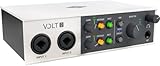
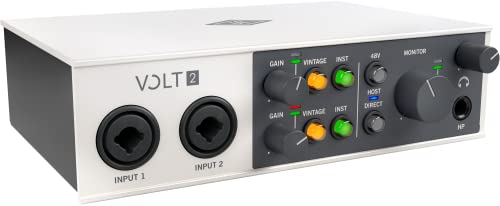
The Volt 2 weighs 1.43 lb in a 2.09 x 6.85 x 5.12 in desktop shell, and records up to 24-bit / 192 kHz. Universal Audio's headline claim is the Vintage mode, which the listing describes as the rich, full album-ready sound of UA's classic 610 preamps. It runs on MacOS, Windows, iPad and iPhone from iOS 14, and ships with UAD plug-ins and instruments. Warranty is one year manufacturer, and two sellers stock it.
The Volt 2 does not publish DC-coupled outputs, so if that is a hard requirement for your rack, this is not the pick. What it does offer is a preamp voicing option that no other 2-in / 2-out in this set matches, plus mobile-device support the Scarlett Solo does not list. Sales rank sits in the middle of the pack. Against the Scarlett Solo the trade is a heavier box and a shorter warranty in exchange for the Vintage mode and iPad support; against the Fender it is the reverse in every dimension.
Pros:
- 24-bit / 192 kHz conversion
- 610 preamp Vintage mode as a claimed feature
- iPad and iPhone support from iOS 14
- Compact desktop footprint at 1.43 lb
- Ships with UAD plug-ins
Cons:
- No stated DC-coupling or CV outputs
- One-year warranty, half of Focusrite's
- Only two inputs and two outputs
- Mid-tier price for what remains a small interface
3. Focusrite Scarlett Solo 3rd Gen — Best upgrade
The default first interface for a bedroom studio, and the one that sells fastest in this set.

Best for: a first proper interface for vocals and guitar Skip it if: you record a full band at once
The Scarlett Solo 3rd Gen weighs 0.77 lb in a 3.77 x 1.71 x 5.65 in USB-C body, and is the one buyers choose most often here. Focusrite lists two high-headroom instrument inputs and two low-noise balanced outputs, backed by a two-year warranty that is the longest published in this set. The bundle includes Pro Tools Intro+, Ableton Live Lite, Cubase LE, and the Hitmaker Expansion suite of effects and instruments.
Focusrite does not publish DC-coupling for this model, so it is not the pick for anyone routing CV. What it is, is the smallest, lightest interface in the shortlist, priced at the second-cheapest position, and paired with the deepest software bundle. Against the M-Track Duo the Scarlett buys you the extended warranty and the DAW bundle; against the Volt 2 you trade the Vintage mode and iPad support for a smaller footprint and longer warranty coverage.
Pros:
- Two-year warranty, the longest here
- Deep DAW and plug-in bundle
- Lightest pick at 0.77 lb
- Sells faster than the rest of this set
- Second-cheapest of the six
Cons:
- No stated DC-coupled outputs
- One mic input only
- No iPad support listed
- Preamp is transparent, not characterful
4. Arturia AudioFuse X8 OUT — Best minimal setup
Eight clean line outputs for a summing mixer or modular rig, with no preamps or headphone jack to pay for.
Best for: adding eight clean line outs to an existing rig Skip it if: you need mic preamps or a headphone jack
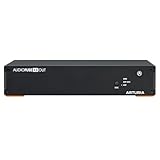
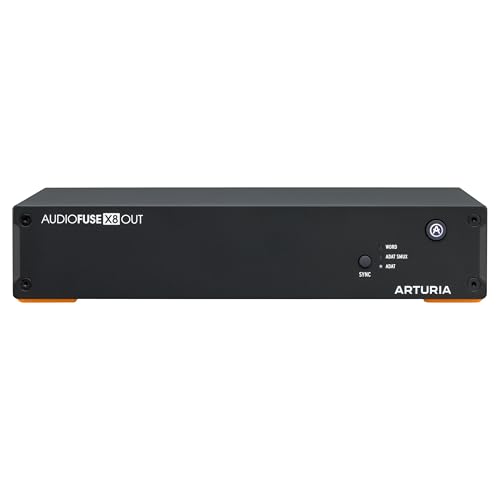
The AudioFuse X8 OUT is a 4.48 lb box measuring 2.51 x 12.1 x 9.44 in, and sits in Amazon's Mixers > Unpowered category rather than under Audio Interfaces. That reflects what it is: an eight-output expander for someone who already owns a primary interface. The listing carries very little published detail beyond dimensions and weight, and the manufacturer's own feature bullet is a single line. Two sellers stock it, and it is the slowest seller of the audio-adjacent picks here.
Arturia does not publish DC-coupling on this listing, but the X8 OUT is often paired with modular rigs because its eight line outputs give you a simple many-channel path from the DAW. If you already own an Apollo, a Clarett, or another modern interface with the mic preamps you need, this box adds output count without duplicating the front end. The trade against every other pick here is stark: no inputs, no mic preamps, no headphone amp, and no published warranty. It only makes sense as an addition.
Pros:
- Dedicated eight-output expander
- No duplication of preamps you already own
- Compact 2.51 in height
- Two sellers stock it
Cons:
- No inputs at all
- No headphone output
- No published warranty
- Minimal specification detail on the listing
5. M-Audio M-Track Duo — Best budget pick
The cheapest of the six, aimed at podcasters and streamers rather than modular producers.
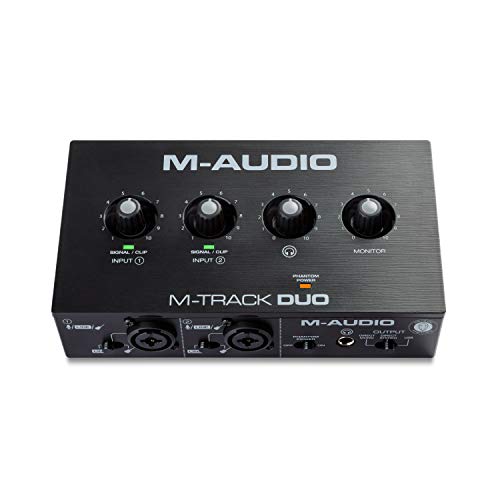
Best for: podcasters and streamers on a tight budget Skip it if: you want 24-bit / 192 kHz or CV routing
The M-Track Duo weighs 0.66 lb in a 2.13 x 4.34 x 7.5 in shell, and is the cheapest of the six. M-Audio lists two combo XLR / Line / Instrument inputs with phantom power, a 1/4-inch headphone output, a USB/Direct switch for zero-latency monitoring, and 48 kHz audio resolution. The bundle is MPC Beats from Akai Professional. Warranty is one year manufacturer.
The Duo does not publish DC-coupled outputs, and its 48 kHz ceiling is well below the 192 kHz the Volt 2 lists and the higher rates the Scarlett Solo supports. That is the real trade at this price position: you get two inputs with phantom power and a headphone jack, which is enough for a two-person podcast or a single vocal-plus-guitar session, but the converters and the software bundle are the shallowest here. Against the Scarlett Solo you save on the up-front price but give up the two-year warranty and the deeper DAW package. If cost is the deciding factor and DC-coupling is not, this is the honest pick.
Pros:
- Cheapest pick in the shortlist
- Two combo inputs with phantom power
- USB/Direct switch for zero-latency monitoring
- MPC Beats software included
Cons:
- 48 kHz sample rate ceiling
- No DC-coupled outputs
- One-year warranty only
- Thin software bundle vs Focusrite
How many inputs do you actually need?
The count on the box is the specification most buyers get wrong. Count your sources honestly.
- One vocal, one guitar, recorded separately: two inputs is plenty.
- Two-person podcast: two inputs with phantom power.
- Vocal plus stereo synth plus drum machine, tracked together: four inputs at minimum.
- Live drum kit with overheads, kick, snare and toms: eight preamps.
- Full band tracked live with room mics: sixteen inputs starts to make sense.
Most bedroom producers land at row one or two and never grow past row three. That is why the Volt 2 and Scarlett Solo outsell the Quantum LT 16 by a wide margin here. If your honest answer is row four or five, or if you route CV to modular, the Fender wins on capability regardless of price.
What the listings do not tell you
Amazon product pages carry manufacturer bullets and physical specifications. They rarely tell you three things that matter for a DC-coupled workflow.
- Which outputs are DC-coupled. Some interfaces DC-couple only outputs 3-4 or 5-6, not the main pair. The listing will not clarify this. Check the manufacturer's PDF spec sheet before you buy.
- Voltage range. A DC-coupled output has a maximum output voltage, typically between ±5 V and ±10 V. A Eurorack pitch input expects 1V/octave over roughly ten octaves. If your interface tops out at ±5 V, you lose the top and bottom of the keyboard.
- Calibration. Sending accurate 1V/octave pitch requires the DAW to know the interface's true output voltage. Bitwig, Reaper and VCV Rack all support calibration routines. Logic and stock Pro Tools do not.
None of these are dealbreakers. They are homework the listing will not do for you.
The verdict
If you actually need DC-coupled outputs for a modular or semi-modular rig, the Fender Quantum LT 16 wins. It is the only interface in this set that publishes DC-coupling and CV routing, and it pairs that with eight preamps, +75 dB of stated gain, and a two-year manufacturer warranty. If your setup is a vocal microphone, a guitar, and a laptop, the Universal Audio Volt 2 is the better buy: 1.43 lb on the desk, 24-bit / 192 kHz conversion, and the 610 preamp Vintage mode Universal Audio's marketing leans on.
The cutoff is CV. If you route pitch or gate to hardware from a DAW plugin, you cross into Fender territory and the price and rack space are justified. If you do not, everything above the Volt 2's capability is money spent on inputs and outputs that will sit dark. For an even tighter budget with no CV ambitions, the M-Track Duo covers a podcast or a single-vocal session for less than any other pick here. The Scarlett Solo sits in the middle for a reason: two-year warranty, deep bundle, fastest seller.
FAQ
What does DC-coupled mean on an audio interface?
DC-coupled means an interface's output stage passes direct current without blocking it. An AC-coupled output uses a capacitor that strips steady voltages, which is fine for audio and useless for control voltage. A DC-coupled output can carry 1V/octave pitch signals and gate signals to a modular synth or semi-modular hardware, letting a DAW plugin sequence external oscillators directly.
Is a DC-coupled audio interface worth it for most home studios?
A DC-coupled audio interface is worth it only if you own hardware that accepts control voltage: a Eurorack case, a semi-modular synth like a Moog Mother-32, or a CV-capable drum machine. For a vocal-and-guitar bedroom setup, or a podcast, the DC-coupling adds cost and rack space with zero payoff. The Volt 2 or Scarlett Solo covers that workflow at a fraction of the size.
How many mic preamps does the Fender Quantum LT 16 have?
The Fender Quantum LT 16 has eight MAX-HD mic preamps, according to the manufacturer's listing, with a stated +75 dB of gain. Six of them feed front-panel XLR/TRS combo jacks; two more are addressed via the rear panel alongside eight additional line inputs. That preamp count is what makes the box viable for tracking a full drum kit or a small ensemble in one pass.
Fender Quantum LT 16 or Universal Audio Volt 2?
Fender Quantum LT 16 or Universal Audio Volt 2 comes down to CV. The Quantum publishes DC-coupled outputs and 16 inputs; the Volt 2 does not, and offers two. If you route pitch to modular from a DAW, the Fender is the only option. If you record a vocal and a guitar into a laptop and want a preamp character, the Volt 2's 610 Vintage mode is what you are paying for.
What is the biggest mistake buying an interface for modular CV?
The biggest mistake is assuming any modern interface can send CV. Most cannot. AC-coupled outputs strip the steady voltage that carries pitch and gate information, so a sequencer plays the wrong notes or nothing at all. Always check the manufacturer's specification sheet for the phrase "DC-coupled" before you buy, and confirm which outputs on the box carry that property.
Start with an honest count of what you record and whether any cable in your studio ever carries control voltage. If nothing does, the Volt 2 or the Scarlett Solo is the shortlist, and DC-coupling is a specification you can ignore. If a modular case or a semi-modular synth is on the desk, the Fender Quantum LT 16 is the pick, and the rack space and price it demands are the cost of getting the job done properly. Read the manufacturer's PDF for whichever interface you choose, look up which outputs are DC-coupled and to what voltage, and calibrate them in your DAW before you patch a single cable to a pitch input.