Best Lightweight WiFi Trail Camera for Backcountry

Five trail cameras compared by weight, wireless range and night-vision claims, with a named winner and the conditions that flip the pick to a runner-up.

By Carter LoganUpdated 14 min read
On this page
- How I narrowed five trail cameras down
- Lightweight wifi trail camera at a glance
- What the wifi label actually means here
- Weight, size and where a camera hides
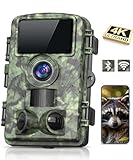
- 1. HXMBFBF 4K 48MP WiFi Game Camera — Best overall
- 2. GardePro E5S Trail Camera — Best for families
- 3. GardePro E6 WiFi Trail Camera — Best premium
- 4. MAXDONE Solar Trail Camera WiFi Bluetooth — Best compact
- 5. Zonetiger Trail Camera — Best for heavy use
- How should you power a trail camera in the woods?
- Which pick suits which setup?
- What the listings do not tell you about night vision
- The verdict
- FAQ
The best lightweight wifi trail camera in this group is the HXMBFBF 4K 48MP WiFi Game Camera, at 0.8 lb and 4 x 5.5 x 3.5 in with a 130-degree lens and a Bluetooth pairing claim of 0.05s trigger response. If you would rather skip phone pairing and just pull an SD card, the GardePro E5S is the sensible swap, with a stated 0.1s trigger, three PIR sensors and a 0.66 lb body.
How I narrowed five trail cameras down
Five cameras, one job: sit on a tree, wake up fast, and send something back to a phone. I lined up every published specification side by side and looked for the ones that actually decide a purchase in this category.
Three cuts drove the ranking:
- Weight and dimensions. A trail camera you lash to a sapling in the dark needs to be small and light. Two of the five publish a weight under one pound; two publish dimensions but no weight; one is smaller than any of the others.
- What the wireless actually does. Every pick here says wifi somewhere on the listing, but the wording varies. One states outright that it does not connect to home wifi. Another advertises an external antenna. That difference is bigger than any megapixel gap.
- Power and endurance. Four run on 8×AA cells. One has a 6000mAh built-in battery paired with a split solar panel. If you cannot revisit the camera each month, that is the deciding line.
I ignored megapixel counts as a tiebreaker. Four of the five cameras claim 48MP or 64MP, and none of the listings publish sensor size, so the number on the box does not separate them. Trigger speed, wireless behaviour and body size do.
Lightweight wifi trail camera at a glance
| Pick | Weight | Night vision claim | Price |
|---|---|---|---|
Best overall HXMBFBF 4K 48MP WiFi Game Camera |
0.8 lb | 98 ft, no-glow IR (claim) | Check Price |
Best for families GardePro E5S Trail Camera |
0.66 lb | IP66, 0.1s trigger (claim) | Check Price |
Best premium GardePro E6 WiFi Trail Camera |
0.66 lb | 940nm no-glow IR (claim) | Check Price |
Best compact MAXDONE Solar Trail Camera |
Not listed (1.7 x 3.9 x 2.6 in) | 65 ft, 850nm low-glow (claim) | Check Price |
Best for heavy use Zonetiger Trail Camera |
Not listed (4 x 8 x 5 in) | No-glow IR (claim) | Check Price |


What the wifi label actually means here
This is the trap. Every listing here uses the word wifi, but they do not all mean the same thing. Read the fine print before you commit.
- The HXMBFBF pairs to a phone over Bluetooth and uses the free TrailCam Go app to browse photos and trigger the camera.
- The Zonetiger describes the same TrailCam Go setup, Bluetooth link and app control.
- The GardePro E6 uses ultra-low-power wifi plus Bluetooth to talk to the GardePro app, with no monthly fee and an external antenna for range.
- The MAXDONE is explicit on its listing: it is not a home wifi camera and does not connect to household internet or allow remote viewing. Your phone joins the camera's built-in hotspot on site.
- The GardePro E5S does not describe a wireless connection at all in the listing bullets. You retrieve the SD card to see what it captured.
Two of the five, then, do not offer any phone pairing in the way most buyers mean when they type "wifi trail camera" into a search box. The lightweight wifi trail camera you want is one whose listing actually describes app pairing, not just the letters w, i, f, i.
Weight, size and where a camera hides
A big camera on a small tree looks like a camera on a small tree. Wildlife notices.
Two picks publish a body weight, and both come in under one pound: the HXMBFBF at 0.8 lb, and the GardePro E5S and E6 at 0.66 lb each. The MAXDONE lists no weight, but the published dimensions of 1.7 x 3.9 x 2.6 in make it the shortest, narrowest and thinnest body in this set by a wide margin. The Zonetiger publishes a 4 x 8 x 5 in footprint, the tallest here, and no weight. On the strap it will feel like the largest of the five.
1. HXMBFBF 4K 48MP WiFi Game Camera — Best overall
The lightest body in this set with a published weight, paired with an app that actually promises phone control.
Best for: hunters who want the lightest body with app pairing Skip it if: you need a stated warranty on paper
At 0.8 lb and 4 x 5.5 x 3.5 in, the HXMBFBF is a small camera you can lash to a young pine without the branch bowing. HXMBFBF says the sensor captures 4K video and 48MP stills, and lists a Bluetooth link to the free TrailCam Go app for remote triggering and photo browsing. The listing states a 0.05 to 0.3 second trigger response and a 130-degree wide-angle lens, wider than the 110-degree figure the GardePro E6 publishes. HXMBFBF also claims no-glow infrared LEDs with night-vision range up to 98 feet, further than the 65 feet MAXDONE publishes for its low-glow LEDs.
The trade-off against the GardePro pair is the paperwork. HXMBFBF publishes no warranty in the listing specifications, while both GardePro cameras carry a one-year manufacturer warranty on paper. If a written warranty matters to you, this pick loses ground.
Pros:
- Lightest body with a stated weight, 0.8 lb
- 130-degree lens, widest published here
- 0.05s trigger response claim
- No-glow IR to 98 ft (claim)
- App pairing via Bluetooth described in listing
Cons:
- No warranty listed
- Only one seller stocks it
- Bluetooth-only pairing, not true wifi
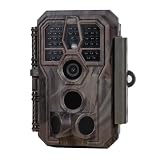
2. GardePro E5S Trail Camera — Best for families
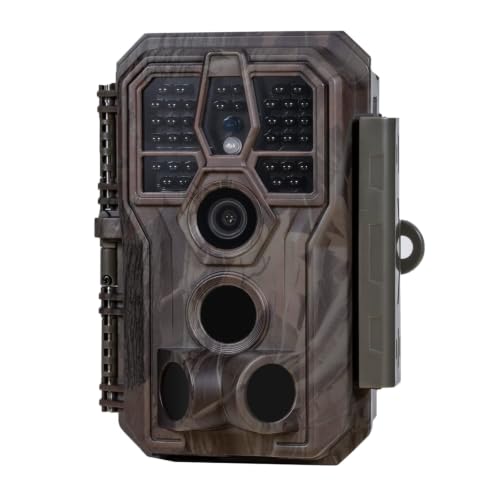
The lightest published weight in this set at 0.66 lb, with three PIR sensors and a stated 0.1s trigger.
Best for: backyard wildlife watchers who prefer pulling an SD card Skip it if: you actually want phone pairing in the field
The E5S is a plainer camera than the HXMBFBF, and that is the point. GardePro claims 64MP stills and 1296p HD video, three PIR sensors and a 0.1 second trigger, an IP66 waterproof rating and a 1/4"-20 mounting thread for tripods, straps and posts. It runs on 8×AA cells and supports the GardePro SP350 solar panel as a separate accessory. At 0.66 lb and 5.6 x 4.2 x 2.4 in it is one of the two lightest bodies here.
The catch: the listing does not describe any wifi or Bluetooth pairing. You will pull the SD card, walk it inside and read it on a laptop or a card reader. For a lightweight wifi trail camera search, that is a real gap. But if you set your camera up on a fence at the edge of a yard and enjoy the ritual of checking the card each Sunday, it slots straight in, and the one-year GardePro warranty on the listing is more paperwork than either of the two cheapest picks offers.
Pros:
- 0.66 lb, tied lightest here
- Three PIR sensors, 0.1s trigger (claim)
- IP66 rating in the listing
- One-year manufacturer warranty stated
- 1/4"-20 thread for standard mounts
Cons:
- No wifi or Bluetooth pairing described
- Requires SD card retrieval on foot
- Solar panel and AA cells sold separately
3. GardePro E6 WiFi Trail Camera — Best premium
The most expensive pick here, and the only one publishing an external antenna for its wifi link.

Best for: buyers who want an external antenna and a written warranty Skip it if: you want the smallest body of the five
The E6 shares the same 0.66 lb weight and 5.6 x 4.2 x 2.4 in body as the E5S, so on the strap they feel identical. What you pay extra for is the wireless: GardePro describes ultra-low-power wifi plus Bluetooth working with the GardePro app, no monthly fee, and a live-view mode that connects up to 45 ft away in open ground. The listing highlights an external antenna for wifi stability, which none of the four other picks publish. Night vision is described as 940nm no-glow IR, the same wavelength you would expect on a stealth-oriented camera.
Where it loses ground is size. It is the same 5.6 x 4.2 x 2.4 in as the E5S, larger than the MAXDONE's 1.7 x 3.9 x 2.6 in body, so if you are trying to hide a camera on a slim trunk in a suburban park, the MAXDONE is easier to conceal. This one is also the most expensive here, so you are paying a premium for the antenna, the app and the warranty rather than for extra megapixels.
Pros:
- External wifi antenna described in listing
- 940nm no-glow IR (claim)
- Live view up to 45 ft in the open (claim)
- One-year manufacturer warranty stated
- 64MP stills, 1296p HD video (claim)
Cons:
- Most expensive here for similar specs
- Same body size as the cheaper E5S
- 8×AA batteries not included
4. MAXDONE Solar Trail Camera WiFi Bluetooth — Best compact
The smallest published body here at 1.7 x 3.9 x 2.6 in, with a built-in 6000mAh cell and a split solar panel.

Best for: remote spots where you cannot swap batteries every month Skip it if: you expected household wifi and remote viewing
Two things separate the MAXDONE from the rest. The dimensions are unlike anything else here: 1.7 x 3.9 x 2.6 in, roughly the footprint of a small paperback, in a driftwood-coloured shell. And power comes from a built-in 6000mAh rechargeable pack paired with an adjustable split solar panel you can angle at the sun. For a lightweight setup deep in the woods, that combination is the argument.
Read the wifi note before you commit. MAXDONE spells it out on the listing: this is not a home wifi camera, it does not link to household internet, and it does not allow remote viewing. Your phone joins its built-in hotspot on site to browse photos and change settings. Night vision uses 850nm low-glow LEDs, described as effective to 65 ft, less than the HXMBFBF's 98 ft figure. It is also the second-most expensive pick and sells faster than any other camera in this set, which suggests the solar-plus-compact story lands with buyers, even with the wifi caveat.
Pros:
- Smallest published footprint here
- Built-in 6000mAh cell plus split solar panel
- 4K video and 64MP stills (claim)
- Adjustable panel angle for seasonal sun
- 850nm low-glow IR (claim)
Cons:
- No home wifi, no remote viewing
- No published body weight
- 65 ft night-vision claim shorter than HXMBFBF's 98 ft
- No stated warranty
5. Zonetiger Trail Camera — Best for heavy use
The largest body in the set, and the second-cheapest, sold as a general-purpose game camera.

Best for: buyers running several cameras and rotating them each week Skip it if: you need the lightest, slimmest body on a small tree
The Zonetiger reads on the listing like a close cousin of the HXMBFBF: 4K resolution and 48MP stills, TrailCam Go app control via Bluetooth, no-glow infrared LEDs, IP66 weatherproofing, and a described trigger speed in the same fast range. If you are buying two or three cameras to spread across a property, the shared app and lower price position make a case for stocking a couple of these as workhorses.
The gap is the body. At 4 x 8 x 5 in, this is the tallest and deepest camera here, meaningfully larger than the HXMBFBF's 4 x 5.5 x 3.5 in and dwarfing the MAXDONE. The listing does not publish a weight. On a fence post it will not matter. On a slim trunk in a public park, it will. It is the second-cheapest of the five, which is a fair position, but call it what it is: a bigger, plainer body running the same app as pick number one, without a stated warranty to lean on.
Pros:
- Second-cheapest pick here
- Same TrailCam Go app as the HXMBFBF
- 4K video, 48MP stills (claim)
- IP66 weatherproofing stated
- No-glow IR described in listing
Cons:
- Tallest body of the five
- No published weight
- No stated warranty
- Only one seller stocks it
How should you power a trail camera in the woods?
Powering a trail camera looks simple until winter. There are two shapes of answer in this set.
AA cells. The GardePro E5S and E6 both take 8×AA batteries, not included, and both accept the GardePro SP350 solar panel as a separate accessory. That gives you flexibility: lithium AAs in the cold, alkalines in mild weather, solar in a permanent spot. It also means one more thing to buy, and one more thing to forget.
Built-in cell plus solar. The MAXDONE ships with a 6000mAh rechargeable pack and an adjustable split solar panel in the box. In a location where you cannot swap cells for weeks, that pairing does the job by itself, provided the panel gets sun.
The HXMBFBF and Zonetiger listings do not specify their power source in the bullets. If unattended runtime matters, favour a camera whose listing states the power design in writing.
Which pick suits which setup?
- Suburban yard, checked weekly. GardePro E5S. Lightweight, waterproof, and pulling the card is a five-second job. No wireless faff.
- Small tree on a hunting lease, phone in the truck. HXMBFBF. Lightest published weight with app pairing, widest lens, longest night-vision claim.
- Remote off-grid spot, revisited every few months. MAXDONE. The built-in cell and adjustable solar panel are the deciding pair, provided you accept it only pairs to your phone on site.
- You want a written warranty and stable range in the open. GardePro E6. The external antenna and the one-year warranty are the levers you are paying for.
- You want two or three cameras across a farm on one app. Zonetiger plus HXMBFBF. Same TrailCam Go app, one of each keeps costs down.
What the listings do not tell you about night vision
Trail-camera listings love a big megapixel number and a night-vision range. Read those with your eyes open.
The megapixel figure describes what the sensor interpolates to, not the raw pixel count, and none of the listings here publish sensor size, so a 64MP claim from one brand and a 48MP claim from another are not directly comparable. Night-vision range is quoted for a subject that fills the frame, in still air, at the camera's best angle. In heavy brush or rain, expect less than the number.
Two useful readings from the wording that is here:
- 940nm versus 850nm. The GardePro E6 describes 940nm no-glow LEDs; the MAXDONE describes 850nm low-glow LEDs. The 940nm claim is the more stealth-oriented wavelength on paper.
- Trigger speed. HXMBFBF states 0.05 to 0.3 seconds. GardePro E5S states 0.1 seconds with three PIR sensors. Both are fast enough for deer at walking pace. Only actual footage decides which handles a running subject better, and no listing here supplies that.
The verdict
The best lightweight wifi trail camera in this group is the HXMBFBF 4K 48MP WiFi Game Camera. At a stated 0.8 lb, with a 130-degree wide-angle lens, a 0.05 second trigger claim and a no-glow IR range of 98 ft, it does the three jobs the category asks of it. It is small enough to hide on a slim trunk, fast enough to catch a walking animal, and the TrailCam Go app pairing means you do not have to hike back to the camera to see what it caught.
Two conditions flip the pick. If you want a written one-year warranty and an external antenna that pushes wifi range in open ground, the GardePro E6 is the better buy despite being the most expensive here and the same body size as the cheaper E5S. If your priority is unattended runtime in a spot you cannot revisit for months, the MAXDONE is the answer, with its built-in 6000mAh cell and adjustable split solar panel, but only if you accept that it does not join your home wifi and does not allow remote viewing.
FAQ
Is a lightweight wifi trail camera worth it over a plain SD-card model?
A lightweight wifi trail camera is worth it when you cannot easily visit the camera and want to browse captures from your phone. The HXMBFBF pairs over Bluetooth to the TrailCam Go app; the GardePro E6 uses low-power wifi with an external antenna. If you check a backyard camera every Sunday anyway, the SD-card-only GardePro E5S at 0.66 lb saves money without giving up much.
What weight counts as lightweight for a trail camera?
Lightweight for a trail camera means under one pound in this set. The HXMBFBF publishes 0.8 lb and both GardePro cameras publish 0.66 lb, so all three qualify. The Zonetiger and MAXDONE do not publish a body weight in their listings, which makes them hard to rank on this axis without opening the box, so treat weight as a specification you can only trust when it is written down.
GardePro E5S versus GardePro E6, which should I pick?
GardePro E5S versus E6 comes down to wireless. Both weigh a stated 0.66 lb, share a 5.6 x 4.2 x 2.4 in body, and carry a one-year manufacturer warranty. The E6 adds ultra-low-power wifi plus Bluetooth and an external antenna described in the listing. The E5S publishes no wireless feature. Choose the E6 if phone pairing matters and the E5S if you prefer SD-card retrieval.
Does the MAXDONE trail camera connect to home wifi?
The MAXDONE trail camera does not connect to home wifi. Its listing states clearly that it is not a household internet camera and does not allow remote viewing. Your phone joins the camera's built-in hotspot on site to browse footage through the app. If you expected notifications on your phone from the sofa, this pick is the wrong shape, and a GardePro E6 or HXMBFBF is closer to what you want.
What is the biggest mistake buyers make in this category?
The biggest mistake buyers make is trusting the megapixel number on the box. None of the five listings here publish sensor size, so a 64MP figure from one brand is not directly comparable to a 48MP figure from another. Trigger speed, lens angle, night-vision wavelength and body weight are the specifications that separate these cameras in practice. Chase those figures first, then compare the claimed resolutions.
If you have been sitting on this decision, start with the HXMBFBF 4K 48MP WiFi Game Camera and use its size, weight and 130-degree lens as the baseline you compare the others against. In a category where every listing shouts about resolution, the deciding factor is a body small enough to disappear on a tree, a trigger fast enough to catch a moving animal, and an app that actually lets you read the card from a phone. The lightweight wifi trail camera you want is the one that gets out of the way. This one does.