Best Single DIN Media Receiver for Daily Drivers

Six single DIN head units compared on chassis depth, pre-outs, EQ bands and warranty — with a clear winner for daily drivers and named alternates for system builders and boats.

By Carter LoganUpdated 16 min read
On this page
- Best single din media receiver at a glance
- Which driver each pick actually fits
- What actually decides a single DIN buy?
- 1. Pioneer MVH-S110BT — Best overall
- 2. Kenwood KMM-BT270U — Best for beginners
- 3. Alpine UTE-83BT — Runner-up
- 4. Alpine UTE-73BT — Best for small spaces
- 5. Sony DSXM55BT — Best for pros
- 6. Clarion M508 — Best premium
- Pre-outs, EQ bands and the upgrade path
- Will it fit behind your dash?
- Marine-labelled receivers: what changes?
- The verdict
- FAQ
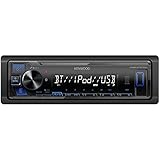
The best single DIN media receiver here is the Pioneer MVH-S110BT, a 1.1 lb head unit on a 2 x 3.87 x 7 in chassis with Bluetooth, USB and a MOSFET amplifier stage that Pioneer rates at 50 watts per channel. If you are building an amplified system with front, rear and subwoofer channels, the Alpine UTE-83BT is the better buy for its three 4V pre-outs and 3-band parametric EQ. Everything else here trades on price position, marine wiring or dash-depth clearance.
Best single din media receiver at a glance
| Pick | Depth or footprint | Pre-outs / EQ | Price |
|---|---|---|---|
Best overall Pioneer MVH-S110BT |
2 x 3.87 x 7 in chassis | Direct EQ keys (claim) | Check Price |
Best for beginners Kenwood KMM-BT270U |
Depth not listed | 13-band EQ (claim) | Check Price |
Runner-up Alpine UTE-83BT |
4.25 in mount depth (claim) | 3 × 4V pre-outs, 3-band parametric | Check Price |
Best for small spaces Alpine UTE-73BT |
Mech-less chassis, 2.78 lb | RBDS tuner, FLAC via USB | Check Price |
Best for pros Sony DSXM55BT |
7.06 x 8 x 2.81 in chassis | 2V rear + sub RCA, EQ5 | Check Price |
Best premium Clarion M508 |
3 lb, marine layout | 4V RCA, aptX Bluetooth | Check Price |



Which driver each pick actually fits
A best single din media receiver list only earns its keep when each row maps to a person. Six head units, six jobs.
- Daily driver, stock speakers, wants Bluetooth calling and USB. Pioneer MVH-S110BT. Cheapest of the six, newest chassis (2025), and the smallest published footprint.
- First upgrade from a factory tape or CD deck. Kenwood KMM-BT270U. Detachable faceplate, USB charging, 13-band EQ per the listing.
- Building an amplified three-way system. Alpine UTE-83BT. Three 4V pre-outs and a 24-bit DAC, per Alpine's spec.
- Fighting a shallow dash cavity in an older car. Alpine UTE-73BT. Mech-less chassis by design; a slot with no CD mechanism gains rear clearance.
- iPhone driver who wants Siri hands-free and SiriusXM wiring already in place. Sony DSXM55BT. Older model, but the feature set is specific.
- Protected marine dash on a pontoon or a cabin cruiser. Clarion M508. aptX Bluetooth and a weather band tuner, though Clarion is explicit that the unit is not water resistant.
Two profiles this set does not serve well: shoppers who want a touchscreen (every pick here is single-line LCD), and shoppers who need CarPlay or Android Auto (none of the six lists either).
What actually decides a single DIN buy?
Most single DIN media receiver comparisons lead with peak wattage. That is the wrong number to lean on.
Peak power on a head unit is a burst rating. The MOSFET amplifier stage inside a single DIN chassis is thermally limited by the size of the case, and every unit in this set lives in the same 50W-per-channel neighbourhood in practice, whatever the box says. Kenwood's "200 Watts Max" and Pioneer's "50 watts per channel" describe the same class of built-in amplifier.
The number that actually flips the buy is the pre-out voltage, and whether there are two of them or three. Two pre-outs (front + rear, or rear + sub) means you can add one external amplifier cleanly. Three 4V pre-outs, as on the Alpine UTE-83BT, means front, rear and subwoofer can each get their own amp with strong signal voltage feeding them. That is the difference between a head unit that boxes you in a year from now and one that grows with the system.
The second decider is chassis depth. A single DIN opening is a standard height and width, but depth behind the dash is not: it varies by vehicle, and a 4.25 in mount depth can be the reason a receiver fits when a 6 in one does not.
Everything else — Bluetooth version, EQ band count, USB format support — is a tiebreaker.
1. Pioneer MVH-S110BT — Best overall
The cheapest pick here, on the smallest published footprint, from the newest model year in the set.
Best for: daily drivers who want Bluetooth, USB and clean sound without an amp build Skip it if: you plan to run three amplified channels with dedicated pre-outs
The MVH-S110BT is the one buyers choose most often in this set by a wide margin. Three things carry it. First, the chassis: 2 x 3.87 x 7 in and 1.1 lb, which is the smallest published footprint of the six and the lightest by more than half a pound. Second, it is a 2025 release, so the Bluetooth stack is current and the USB decoder handles FLAC, MP3 and WMA on the front port. Third, Pioneer rates the built-in MOSFET amplifier at 50 watts per channel across four speakers, which is enough headroom to drive a stock speaker set without an outboard amp.
Pioneer's Direct EQ Keys give you bass, treble and balance from the fascia, which is where a driver actually reaches for them. The trade-off against the two Alpines below is real: this deck has fewer pre-outs and no parametric EQ, so it is the wrong choice if a subwoofer amp is already in the plan. For stock speakers, it is the default.
Pros:
- Smallest published chassis: 2 x 3.87 x 7 in
- Cheapest of the six
- 2025 model year, current Bluetooth
- 50W-per-channel MOSFET stage (claim)
- FLAC, MP3 and WMA via front USB
Cons:
- No published pre-out count
- Basic 3-parameter EQ, no parametric bands
- 1-year warranty is the shortest tier in the set
2. Kenwood KMM-BT270U — Best for beginners
The second-cheapest here, with a detachable faceplate and a 13-band EQ on the listing.

Best for: a first upgrade from a stock radio, with hands-free calling and USB charging Skip it if: you need published chassis depth before you commit to install
Kenwood's KMM-BT270U is the second-cheapest pick and reads as a natural step up from a factory head unit. The listing calls out Bluetooth streaming and hands-free calling, MP3 playback, an AUX input, iPod and iPhone compatibility, and USB charging so a phone can top up while it plays. The 13-band EQ Kenwood advertises is finer than what the Pioneer offers on paper, though both are wrapped inside the same class of built-in amplifier.
Two things hold it back from the top spot. The published dimensions on the listing (14 x 18 x 9 in) describe the outer packaging, not the chassis, so you cannot check mount depth from the data before you buy — a Kenwood specification sheet or dealer measurement is a required second step. And the pre-out configuration is not published in the specs supplied, which matters if an amplifier upgrade is on the horizon. As a plug-and-play swap into a car whose dash cavity is a known-easy fit, it earns its place.
Pros:
- Detachable faceplate
- 13-band EQ (claim)
- USB charging while playing
- Second-cheapest of the six
- iPod and iPhone connection listed
Cons:
- Chassis dimensions not published, only pack size
- Pre-out configuration not stated in the specs
- No release year on the listing
3. Alpine UTE-83BT — Runner-up
Three 4V pre-outs, a 3-band parametric EQ and a 4.25 in claimed mount depth — the system builder's pick.

Best for: system builders adding front, rear and subwoofer amplification Skip it if: you want the cheapest working Bluetooth head unit in the set
The UTE-83BT is the second-most expensive pick and the only unit in the set that publishes three separate 4V pre-outs. That is what it is here for. Feed a front amp, a rear amp and a monoblock subwoofer amp from the head unit without a Y-splitter, at a signal voltage strong enough to keep the noise floor down. Alpine also publishes a 3-band parametric EQ, high-pass and low-pass crossovers, Bass Engine SQ processing and a 24-bit DAC — a tuning toolkit that goes well past what the Pioneer or Kenwood offer.
Alpine states a 4.25 in mount depth on the shallow chassis, which is a genuine install advantage in vehicles where the dash cavity is tight and the CD-mechanism decks will not clear. The included external microphone with mounting bracket is a nice touch for cleaner voice pickup on calls.
The trade-off is straightforward. For a car with stock speakers and no amplifier plans, most of what makes the UTE-83BT worth its price sits idle. It is the runner-up only because the Pioneer wins for a bigger group of buyers, not because it is beaten on capability.
Pros:
- Three 4V pre-outs (front, rear, sub)
- 3-band parametric EQ (claim)
- 4.25 in mount depth (claim)
- External Bluetooth microphone included
- 24-bit DAC in the spec sheet
Cons:
- Second-highest price position in the set
- Overkill for stock-speaker installs
- Slower seller than the Pioneer, Kenwood or Alpine UTE-73BT
4. Alpine UTE-73BT — Best for small spaces
Mech-less chassis by design, 2.78 lb, and an RBDS tuner with FLAC USB playback.

Best for: shallow dash cavities where a mech-less chassis buys clearance Skip it if: you need a printed mounting depth on the listing before you buy
The UTE-73BT is a 2015 model that Alpine keeps in the range because it does one thing well: it removes the CD mechanism from the chassis and gives you back the depth behind it. In older cars, in trucks with aftermarket dash kits, in vans with a swap-plate that steals half an inch, that clearance is often the whole reason a receiver either fits or does not.
The feature set is deliberately narrow. AM/FM tuning with RBDS text data, FLAC, MP3 and WMA over USB, iPod and iPhone connection, Android AOA 2.0 support, and Pandora on both platforms. Bluetooth is on board, though the specs supplied do not name a version. At 2.78 lb the chassis is heavier than the Pioneer or Sony, so the mech-less pitch here is about depth, not overall bulk.
The gap in the data is the honest weakness: the listing's dimensions field reads 0 x 0 x 0 in, so you cannot confirm mount depth from Amazon alone. Alpine publishes it separately, but you have to go and find it before you commit.
Pros:
- Mech-less chassis, purpose-built shallow
- FLAC playback via USB
- RBDS radio text
- Pandora support on iPhone and Android
- Alpine 1-year warranty
Cons:
- Chassis dimensions not populated on the listing
- 2015 release, the oldest in the set
- Pre-out configuration not stated
5. Sony DSXM55BT — Best for pros
SiriusXM-ready wiring, Siri hands-free control and EQ5 tuning, on a 7.06 x 8 x 2.81 in chassis.

Best for: drivers wanting SiriusXM-ready wiring and Siri hands-free from an iPhone Skip it if: you want the newest firmware and the freshest Bluetooth stack
The DSXM55BT is a specific pick, not a generalist. Sony builds it as a marine digital media stereo receiver, so the chassis has the labelling and the SiriusXM antenna hooks a boater expects, but nothing on the listing claims water resistance. Where it earns its place is the iPhone-centric feature list: NFC one-touch pairing, Siri Eyes Free control, and a front USB that accepts iOS and MSC/MTP devices. The built-in mic is on board, and Sony ships a wireless remote in the box.
Sound tuning is Sony's EQ5 preset system plus Mega Bass and a low-pass filter crossover for a subwoofer channel. Two 2V rear and sub RCA pre-outs are published — not the three that the Alpine UTE-83BT carries, but enough for a two-amp build.
The catch is the release year: 2016. Bluetooth has moved on twice since, and the specs supplied do not name a version. If a current pairing experience with a modern Android device matters to you, one of the newer Alpines or the 2025 Pioneer is the safer buy. If the exact combination of SiriusXM wiring and Siri control is what you came for, this is the only one in the set that offers both.
Pros:
- SiriusXM-ready out of the box
- Siri Eyes Free control listed
- NFC one-touch pairing
- 2V rear and subwoofer RCA pre-outs
- Wireless remote included
Cons:
- 2016 release, the oldest with a stated year
- Bluetooth version not published
- Only one seller lists it
- Slower seller than the car-audio picks
6. Clarion M508 — Best premium
Marine-labelled single DIN with aptX Bluetooth, weather band radio and 4V RCA outputs — for protected dashes only.

Best for: a protected marine dash with aptX streaming and weather band tuning Skip it if: the unit will sit anywhere exposed to spray or washdown
The Clarion M508 is the most expensive pick here and the only one with two features that no other unit in the set offers: Qualcomm aptX Bluetooth streaming, which raises the ceiling on wireless audio quality from a compatible phone, and a Weather Band tuner alongside AM/FM for marine forecasts on the water. Clarion also publishes 4V RCA outputs and the standard USB and AUX inputs, plus SiriusXM readiness with an optional tuner and antenna sold separately.
Read the marine label carefully. Clarion is explicit on the listing: this is a standard single DIN receiver, it is not water resistant, and it needs to be installed in a protected location away from direct spray, washdown or submersion. On a pontoon helm under a hardtop, in an enclosed cabin, or in a car, the M508 is a straight upgrade for aptX and weather radio. On an open bass boat console, it is the wrong tool.
At 3 lb it is the heaviest chassis in the set. It is also the slowest seller here, so stock and seller depth are thinner than they are on the Pioneer or the Kenwood.
Pros:
- aptX Bluetooth streaming
- AM/FM plus Weather Band tuner
- 4V RCA pre-outs
- SiriusXM-ready wiring
- Marine-oriented layout for boat dashes
Cons:
- Highest price position in the set for no waterproofing
- Not water resistant, per Clarion's own note
- Slowest seller of the six
- Heaviest chassis at 3 lb
Pre-outs, EQ bands and the upgrade path
Two numbers on a single DIN spec sheet tell you where the head unit lets you go next.
Pre-out count. Two pre-outs is the entry configuration: rear and subwoofer, or front and rear. Three pre-outs is the system-builder configuration: front, rear and subwoofer each fed independently. In this set, only the Alpine UTE-83BT publishes three 4V pre-outs. The Sony DSXM55BT publishes 2V rear and subwoofer RCA pre-outs. The Clarion M508 lists 4V RCA outputs. The Pioneer, Kenwood and Alpine UTE-73BT do not state their pre-out configuration in the data supplied.
Pre-out voltage. A 4V pre-out feeds an external amplifier with more signal than a 2V pre-out does, which lowers the amp's input sensitivity setting and cuts the noise floor. A 2V pre-out works fine, it just leaves less headroom. Between the two Alpines and the Clarion, the higher-voltage pre-outs are a real, measurable advantage over the Sony's 2V pair when the ignition is on and the alternator is whining.
EQ bands. Kenwood advertises 13 bands on the KMM-BT270U. Alpine publishes a 3-band parametric on the UTE-83BT, which is different in kind: parametric bands let you tune the centre frequency and the width, not just the gain, which matters when a specific speaker resonance needs pulling down. Sony lists a 5-band EQ (EQ5). Pioneer's Direct EQ Keys expose bass, treble and balance on the fascia, per the listing. A parametric 3-band, done well, beats a graphic 13-band for tuning a system.
If the goal is a stock-speaker refresh, the EQ argument barely matters. If the goal is a subwoofer plus a component front stage, the pre-outs and the crossovers on the UTE-83BT are the reason to spend up.
Will it fit behind your dash?
Single DIN is a standard opening: 50mm tall by 180mm wide. Depth is where installs fail.
- Measure the dash cavity before you buy. From the back of the trim ring to the nearest obstruction — wiring loom, HVAC duct, structural brace — is the number that has to be larger than the receiver's mount depth.
- Add 1.5 to 2 in for the harness plug and wiring loop behind the chassis. Every install needs slack; a receiver that just clears the cavity will pinch its own wires.
- Check the mount depth on the listing. In this set, only the Alpine UTE-83BT publishes it directly (4.25 in claim). The Pioneer's overall chassis is 2 x 3.87 x 7 in, so mount depth is under 7 in. The Kenwood dimensions on the listing are packaging, not chassis. The Alpine UTE-73BT dimensions field reads 0 x 0 x 0 in on the listing — that is a data gap, not a real number.
- Mech-less matters when depth is tight. Both Alpine UTE-83BT and UTE-73BT are mech-less by design, meaning no CD mechanism inside. That removes the deepest component in a traditional head unit.
- A dash kit and a wiring harness are almost always extra. Neither is included with any of the six picks. Match them to the vehicle year and model.
For most passenger cars built after 2005, any of these six will fit with the right kit. In older trucks, in vans, and in cars with aftermarket dash trim, the mech-less Alpines are the safer bets.
Marine-labelled receivers: what changes?
Two picks in this set carry a marine label: the Sony DSXM55BT and the Clarion M508. Neither is fully waterproof, and Clarion states this outright on its own listing. A "marine digital media receiver" designation means the chassis and the internal treatment tolerate a protected marine dash environment — humidity, salt air, some UV exposure — better than a pure car receiver would. It does not mean you can hose it down.
What you actually get is:
- SiriusXM-ready wiring on both, so a boat's satellite antenna can hook up without a splice.
- A weather band tuner on the Clarion (NOAA-style weather radio alongside AM/FM). The Sony does not list this.
- A chassis layout aimed at pontoon helms, cabin cruisers and enclosed boat dashboards, not open cockpits.
For a car install, the marine label is a neutral. The Sony gives you Siri and NFC, the Clarion gives you aptX and weather radio, and neither pays a real penalty in a dashboard. For an open boat, neither is the right receiver — a truly waterproof marine head unit lives in a different product category.
The verdict
The Pioneer MVH-S110BT is the best single din media receiver for the largest group of buyers here: it is the cheapest of the six, the newest at a 2025 release, and the smallest published chassis at 2 x 3.87 x 7 in and 1.1 lb, with a MOSFET amplifier stage that Pioneer rates at 50 watts per channel across four speakers. For a stock-speaker refresh with Bluetooth calling and FLAC USB playback, nothing else in the set beats it on the combination of size, currency and price.
If you are building an amplified system, the Alpine UTE-83BT is the correct answer. Three 4V pre-outs, a 3-band parametric EQ, high-pass and low-pass crossovers, and a claimed 4.25 in mount depth make it the runner-up on merit rather than by process of elimination.
The cutoff is the amplifier. No external amps in the plan: buy the Pioneer. External amps in the plan: buy the Alpine UTE-83BT. Boat with a protected dash and a taste for aptX: the Clarion M508. Everything else in the set fills a narrower slot around those three.
FAQ
Is a single DIN media receiver worth it over a factory head unit?
A single DIN media receiver is worth it when the factory unit lacks Bluetooth hands-free calling, USB audio, or a decent EQ. Every pick here adds all three. The Pioneer MVH-S110BT is the cheapest step up and adds a 50W-per-channel MOSFET amplifier stage per Pioneer's spec, on a 2025 chassis measuring 2 x 3.87 x 7 in.
What does mech-less mean on the Alpine UTE-73BT and UTE-83BT?
Mech-less means the Alpine UTE-73BT and UTE-83BT have no CD mechanism inside the chassis. That removes the deepest internal component and buys back mounting depth behind the dash. Both accept music via Bluetooth, USB and AUX instead. The UTE-83BT publishes a 4.25 in mount depth, which is a real advantage in a shallow dash cavity where CD-based receivers will not clear.
How does the Pioneer MVH-S110BT compare to the Kenwood KMM-BT270U?
The Pioneer MVH-S110BT is smaller and newer: a 2 x 3.87 x 7 in chassis at 1.1 lb, released in 2025. The Kenwood KMM-BT270U publishes a 13-band EQ and a detachable faceplate, but its listing dimensions describe the packaging, not the chassis. For known-easy installs, either works. For a shallow cavity, the Pioneer's published footprint is the safer number.
Can I install a marine single DIN receiver in a car?
Yes, a marine single DIN receiver installs in a car the same way a car receiver does — the DIN opening is a standard size. The Sony DSXM55BT and Clarion M508 both fit a car dashboard, and you gain aptX (Clarion) or Siri and NFC (Sony) as a bonus. Clarion notes its M508 is not water resistant, so protected mounting matters even inside a vehicle.
What is the deciding specification for a single DIN media receiver?
The deciding specification for a single DIN media receiver is the pre-out configuration, not peak wattage. Two pre-outs supports one external amp; three 4V pre-outs supports a full front, rear and subwoofer amplified system. In this set, only the Alpine UTE-83BT publishes three 4V pre-outs. The Sony DSXM55BT publishes 2V rear and sub outputs, and the Clarion M508 lists 4V RCA outputs.
Start with the Pioneer MVH-S110BT if none of this set's edge cases apply to you. It is the cheapest, the newest, and the smallest chassis in the six, and Pioneer's 50W-per-channel MOSFET stage is enough amplifier for a stock speaker set. Add a dash kit and a wiring harness for the vehicle, allow an hour on the driveway, and the upgrade is done. The reason it wins the default slot is not that it out-features the Alpines or the Clarion — it does not — but that its trade-offs match what most single DIN buyers actually want: Bluetooth calling, USB audio, current firmware, a small chassis, and a price that leaves the speaker budget alone.