Best Compact Microscope for Kids: BMDSAE Leads

A spec-by-spec look at five handheld kids' microscopes, from a 20 g featherweight to a 400X dual-lens camera, with the deciding figure most gift guides skip: screen size.

By Carter LoganUpdated 15 min read
On this page
- Best compact microscope for kids at a glance
- What actually decides a compact microscope for kids?
- How I screened these five picks
- Screen size, weight and warranty compared
- 1. BMDSAE 1000X Handheld Digital Microscope for Kids — Best overall
- 2. BEBANG Kids Digital Microscope STEM Toy — Best for families
- 3. Pozifu 1000X Handheld Digital Microscope for Kids — Best lightweight
- 4. Temodu Kids Microscope 2.0" Screen — Best budget pick
- 5. LiTTPOPO MicroCam-X1 4K Digital Camera — Best premium
- How much magnification does a kid really need?
- What the listings do not tell you
- The verdict
- FAQ
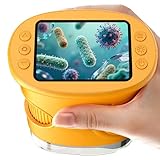
The best compact microscope for kids is the BMDSAE 382, because it pairs a 2.0-inch IPS screen with 8 adjustable LEDs, a 600mAh battery and a 1-year warranty in a 7.76 oz body. If you want glass slides and a fitted case in the box, the BEBANG PM1000 kit is the better buy. The deciding figure in this whole category is screen size, not magnification, and it splits this field of five into two clear groups.
Best compact microscope for kids at a glance
| Pick | Screen | Magnification | Price |
|---|---|---|---|
Best overall BMDSAE 1000X Handheld Digital Microscope |
2.0" IPS | 1000X claim | Check Price |
Best for families BEBANG Kids Digital Microscope STEM Toy |
Handheld viewer | 200X–1000X claim | Check Price |
Best lightweight Pozifu 1000X Handheld Digital Microscope |
2.0" IPS | 50X–1000X claim | Check Price |
Best budget pick Temodu Kids Microscope 1000X |
2.0" IPS | 1000X fixed claim | Check Price |
Best premium LiTTPOPO MicroCam-X1 4K Digital Camera |
3.5" LCD touch | 400X claim | Check Price |


What actually decides a compact microscope for kids?
Most gift guides rank these by magnification. That number is close to useless here. Four of these five listings claim 1000X, and every one of those four gets there by combining optics with digital zoom, which is cropping and enlarging pixels from a 2MP sensor. A 2MP camera pushed to 1000X does not resolve more detail than the same camera at 200X. It just shows you a bigger, blurrier version.
What decides it is the screen. A compact microscope for kids succeeds or fails on whether a child can see the image without an adult holding anything steady. Three picks here use a 2.0-inch IPS screen. One uses a 3.5-inch LCD touchscreen. That difference in viewing area is the single biggest gap in this set, and it is the one you can actually verify from the published specifications.
Two secondary criteria matter after that:
- Weight, because a child holds this in one hand while poking at a leaf with the other. The range here runs from 20 g to 7.76 oz.
- Warranty, because these are plastic-bodied toys that get dropped. The published terms span 180 days to 2 years.
One more note on the search itself. Amazon returns these under a "kids" query, but the listings state age ranges the manufacturers chose, not any independent age certification. The BMDSAE listing does state CE/FCC/CPC safety marks. The others do not publish equivalent detail, so age suitability is something you have to judge from the product itself.
How I screened these five picks
I weighted four criteria and then let the published specifications sort the field. Here is the weighting, heaviest first.
- Viewing experience, 40%. Screen size and type, LED count, and whether the child can operate it alone. A screen is the whole interface on a handheld digital microscope.
- Portability, 25%. Published weight and dimensions. This is a compact microscope for kids, so a body that does not fit a pocket defeats the point.
- Published support, 20%. Stated warranty length and how many sellers list the item.
- What's in the box, 15%. Slides, memory card, case, strap.
Why that order? Because the first two are the things a seven-year-old notices in the first ten minutes, and the last two are the things a parent notices in month three. Both matter, but a microscope nobody picks up has no month three.
I did not weight magnification at all, for the reason given above. I also refused to score any claim that only appears as marketing text with no figure attached. "Crystal-clear" is not a specification. "2MP" is.
Where a listing publishes a figure that another does not, I treated the silence as a mark against it. The Pozifu, for example, publishes weight but no dimensions. That is a gap you feel when you're trying to work out whether it clips to a backpack.
Screen size, weight and warranty compared
Three figures separate this set. Lined up, they tell you almost everything.
- Screen: 2.0-inch IPS on the BMDSAE, Pozifu and Temodu. 3.5-inch LCD touchscreen on the LiTTPOPO. The BEBANG listing describes a handheld viewer and does not publish a screen size, which is the one real hole in an otherwise well-documented kit.
- Weight: Pozifu at 20 g, LiTTPOPO at 4.5 oz, BMDSAE and Temodu at 7.76 oz each, BEBANG at 1.13 oz. The Pozifu is the featherweight of the group by a wide margin.
- Warranty: Temodu publishes 2 years, the longest here. BMDSAE, BEBANG and LiTTPOPO each publish 1 year. Pozifu publishes 180 days, the shortest in the set.
Notice what that last line does to the price story. The Temodu is the cheapest of the five and carries the longest published warranty. The Pozifu is the second-cheapest and carries the shortest. Price position and support length do not move together in this category, which is unusual and worth knowing before you sort a search page by cost.
Two of the five share the same 7.76 oz weight and the same 2.0-inch screen. The BMDSAE lists model 382; the Temodu lists model inskam382 with dimensions of 5.51 x 3.94 x 2.76 in. Read the two listings side by side before you buy either, because you may be choosing between very similar hardware with different warranty terms attached.
1. BMDSAE 1000X Handheld Digital Microscope for Kids — Best overall
The BMDSAE 382 wins because it publishes the most complete picture of what a child actually touches: a 2.0-inch IPS screen, 8 adjustable LEDs, manual focus and a 600mAh rechargeable battery in a 7.76 oz body.
Best for: a 6-to-12-year-old who wants to keep photos of what they find Skip it if: you want glass slides in the box
This is the pick buyers choose most often in this group by a large margin, and the specification sheet explains why. Manual focus control is the standout. Two other picks here describe fixed or simplified focusing, and fixed focus means a child either gets a sharp image at one working distance or gets nothing. A focus knob is the difference between examining a thick beetle wing and giving up on it.
The lighting is the second reason. BMDSAE says the 8-LED array runs in three brightness modes, off, medium and high. Adjustable brightness matters more than raw LED count on a magnifying device, because a shiny specimen at high power blows out under full light. The listing also claims 32MB of onboard storage holding 200-plus photos or AVI video, and claims anti-shake processing.
Materials are the one place this listing goes further than its rivals: eco-friendly ABS plastic with stated CE, FCC and CPC certification. No other pick here publishes that combination.
The trade-off is contents. At 7.76 oz it's tied for heaviest here, and the box holds the microscope and gift packaging rather than slides, a case or a memory card. The BEBANG kit beats it comprehensively on accessories.
Pros:
- Manual focus control, rare in this price group
- 8 LEDs with three brightness settings
- 2.0-inch IPS screen for solo use
- CE, FCC and CPC marks stated on the listing
- 1-year published warranty
Cons:
- Tied for heaviest at 7.76 oz
- No glass slides, case or memory card included
- Only 32MB onboard storage claimed
- Only one seller lists it
2. BEBANG Kids Digital Microscope STEM Toy — Best for families
The BEBANG PM1000 is the only pick here that arrives as a complete kit, with a 32GB card, five real glass slides and a fitted EVA case.

Best for: siblings sharing one kit at the kitchen table Skip it if: you only need the viewer itself
Contents are the entire argument for this one. BEBANG says the box includes 5 lab-grade glass specimen slides, a 32GB memory card, a charging cable, a neck strap and a hard-shell EVA case sized to hold all of it. Every other pick in this set ships the viewer and little else, and two of them explicitly note that a memory card is not included.
That matters more than it sounds. A microscope with nothing to look at gets used on a fingertip, a carpet fibre and then a shelf. Prepared slides give a child a first session that actually works, which is what turns a gift into a hobby.
The other genuinely useful detail is the slide slot. BEBANG says the holder was widened from 2mm to 3mm so glass slides pass through more smoothly. That's a small mechanical fix aimed squarely at the moment a six-year-old jams a slide sideways. The listing claims five adjustable magnification steps from 200X to 1000X.
At 1.13 oz published weight and 4 x 1.8 x 3 in, it's genuinely pocketable. The catch is what it doesn't publish: no screen size anywhere in the specifications, which is the one figure I most wanted. It also sits at the top of the price range here, and it sells far slower than the BMDSAE.
Pros:
- 5 real glass prepared slides included
- 32GB memory card in the box
- Fitted EVA hard case holds the whole set
- Widened 3mm slide slot for small hands
- Compact at 4 x 1.8 x 3 in
Cons:
- No published screen size
- The most expensive pick here alongside the LiTTPOPO
- No published focus mechanism detail
- Sells much more slowly than the top pick
3. Pozifu 1000X Handheld Digital Microscope for Kids — Best lightweight
At 20 g published weight, the Pozifu is by far the lightest compact microscope for kids in this set, and it still carries a 2.0-inch IPS screen.

Best for: a small child who carries it on nature walks Skip it if: you want a memory card included
Twenty grams is the number to focus on. That's a fraction of the 7.76 oz shared by the BMDSAE and Temodu, and it changes who this suits. A four-year-old's wrist tires fast. Something this light gets carried into the garden and used on the spot rather than dragged to a table first.
Pozifu claims 50X to 1000X magnification with a 178-degree viewing angle, and pairs the 2.0-inch IPS screen with a 1080p 2MP camera. Same screen size as the top pick, same sensor resolution on paper. The listing also claims a 600mAh rechargeable battery with Type-C charging, which is the connector you already have in the house.
The 50X figure at the bottom of the range is more useful than it looks. Low power gives a wide field of view, and a wide field is how a child finds the thing they wanted to look at before zooming in.
Two things hold it back. The listing states a TF card is not included, so photo storage needs a separate purchase, and the published warranty is 180 days, the shortest of the five. It's also the second-cheapest here, so you're trading support length for a low price and a very light body. It sells slowly compared with the BMDSAE and BEBANG.
Pros:
- 20 g published weight, lightest in this set
- 2.0-inch IPS screen matches the top pick
- 50X starting magnification gives a wide field
- Type-C charging on a 600mAh battery
Cons:
- 180-day warranty, shortest of the five
- Memory card not included
- No published dimensions
- Only one seller lists it
4. Temodu Kids Microscope 2.0" Screen — Best budget pick
The Temodu is the cheapest of the five and still publishes the longest warranty here at 2 years, which is an unusual pairing.

Best for: a first microscope for a 4-to-7-year-old Skip it if: your child needs fine manual focus
Start with the warranty, because it's the reason this pick is here. Two years is double what the BMDSAE, BEBANG and LiTTPOPO publish and four times the Pozifu's 180 days. On a plastic device that will be dropped onto a patio at some point, a longer stated term is worth real money.
The specifications otherwise track the top pick closely: 2.0-inch IPS colour screen, 8 LED lights with adjustable brightness, storage for roughly 200 photos, 7.76 oz weight. Published dimensions are 5.51 x 3.94 x 2.76 in, and Temodu says a thickened neck strap is included so a child can run around with it hanging free. That strap is a genuinely practical inclusion that only this pick and the BEBANG kit mention.
The focus arrangement is where it gives ground. Temodu describes fixed super macro focus with a 4x zoom adjustment knob, rather than the continuous manual focus the BMDSAE claims. Fixed focus is simpler for a young child to operate and more limiting once they want to examine something thicker than a leaf.
It's the slowest-moving pick of the five apart from the LiTTPOPO, and the listing puts "382" in the size field, which tells you nothing useful.
Pros:
- 2-year published warranty, longest here
- Cheapest of the five
- 8 LEDs with adjustable brightness
- Thickened neck strap included
- Published dimensions of 5.51 x 3.94 x 2.76 in
Cons:
- Fixed focus rather than continuous manual focus
- Tied for heaviest at 7.76 oz
- No slides or memory card included
- Confusing size entry in the specifications
5. LiTTPOPO MicroCam-X1 4K Digital Camera — Best premium
The MicroCam-X1 is a 12.1MP point-and-shoot camera with a 400X microscope mode on a rotating dual lens, and its 3.5-inch touchscreen is the largest display in this comparison.

Best for: an older kid who wants a real camera that also magnifies Skip it if: magnification above 400X matters to you
This is the odd one out, and deliberately so. It's the only pick listed under point-and-shoot cameras rather than microscopes, and it's built as a camera first. LiTTPOPO says a 180-degree lens rotation switches between standard photography and 400X microscope mode, so one device covers a school project and a family day out.
The screen is the headline. At 3.5 inches it's 75% larger diagonally than the 2.0-inch panels on three of these picks, and it's a touchscreen behind 8H high-alumina glass, which the listing claims for scratch resistance. On a device a child carries, that glass spec matters. The sensor is a 12.1MP BSI CMOS with 4K video, five photo modes including timer and interval, and three video modes including time-lapse and slow motion. Published weight is 4.5 oz, and the listing states 32GB.
The trade-off is stated magnification. At 400X it's the lowest number in this set by a wide margin. In practice that gap is smaller than it reads, because the four 1000X claims lean on digital zoom, and this pick starts from a 12.1MP sensor rather than a 2MP one. Still, if 1000X is the figure on your gift list, this isn't it.
It also has the highest price position here and the slowest sales of the five, and the extra features mean more buttons for a young child to get lost in.
Pros:
- 3.5-inch LCD touchscreen, largest here
- 12.1MP BSI CMOS sensor with 4K video
- Rotating dual lens switches to 400X mode
- 8H high-alumina glass over the screen
- Autofocus, unlike the fixed-focus picks
Cons:
- 400X, the lowest stated magnification in this set
- Highest price position with the BEBANG
- More modes than a young child needs
- Slowest-selling pick of the five
How much magnification does a kid really need?
Less than the box promises. Here's the practical range for what children actually put under a lens.
- 10X to 60X: insect legs, flower petals, fabric weave, coin detail, sand grains. This is where most sessions happen, and every pick here covers it.
- 100X to 200X: onion skin cells, hair shafts, prepared slide specimens. The BEBANG's glass slides live in this band.
- 400X and above: individual plant cells, if the optics and lighting cooperate. The LiTTPOPO tops out here.
- Above 400X on a 2MP sensor: mostly enlarged pixels.
That last line is why I don't rank on the 1000X figure. When four listings in a five-product set all claim the same headline number, the number has stopped separating anything. Look at screen size, focus type and lighting control instead. Those three determine whether a child gets a usable image, and all three are published.
What the listings do not tell you
Some gaps are worth knowing before you commit.
The BEBANG kit never publishes a screen size, which for a handheld digital viewer is the specification I'd most want. The Pozifu publishes weight but no dimensions, so pocket fit is guesswork. The Temodu fills its size field with a model number.
Battery life is unstated across the board. Two picks publish a 600mAh cell, which tells you capacity but not runtime, and nobody publishes hours. Onboard storage is similarly thin: the BMDSAE claims 32MB, the LiTTPOPO lists 32GB, the Pozifu says a card is not included, and the BEBANG bundles 32GB.
Seller depth is the quiet one. Four of these five are listed by a single seller. Only the BEBANG shows two. That's worth a glance if warranty service matters to you.
The verdict
Sort this by what you're willing to spend and the choice gets simple.
At the entry end, the Temodu is the pick. It's the cheapest of the five, publishes a 2-year warranty that beats everything else here, and delivers the same 2.0-inch IPS screen and 8 adjustable LEDs as the winner. You give up continuous manual focus for a fixed macro setup with a 4x zoom knob. For a first microscope aimed at a four-to-seven-year-old, that simplicity is arguably a feature.
In the middle sits the BMDSAE 382, and it's the best compact microscope for kids overall. Manual focus control is the reason. It's the only pick here that pairs a real focus mechanism with three-stage LED brightness and stated CE, FCC and CPC certification, and it's the one buyers reach for most often in this group. Its published 1-year warranty is shorter than the Temodu's, and the box holds no slides. Those are the costs.
At the top, two picks split by purpose. The BEBANG PM1000 buys you a complete kit: 5 glass slides, a 32GB card and a fitted EVA case, all in a 1.13 oz body. The LiTTPOPO MicroCam-X1 buys you a 3.5-inch touchscreen and a 12.1MP sensor with 4K video, at the cost of a 400X ceiling.
The cutoff is age. Under eight, take the BMDSAE. Ten and up, the LiTTPOPO earns its place.
FAQ
Is a compact microscope for kids worth buying?
A compact microscope for kids is worth buying when the child can operate it alone, and a screen is what makes that possible. All five picks here put the image on a display rather than in an eyepiece, so no one has to hold a head still. The Temodu's 2-year published warranty makes the low end of this category easier to justify.
What magnification should I look for?
The magnification you should look for is lower than the packaging suggests. Insects, fabric and coins all read well between 10X and 60X, and prepared slides work around 200X. Four of these picks claim 1000X using digital zoom on a 2MP sensor, which enlarges pixels rather than revealing detail. Screen size and focus type separate these products far more usefully.
BMDSAE or BEBANG: which should I pick?
Choose BMDSAE or BEBANG based on what you want in the box. The BMDSAE 382 publishes manual focus, a 2.0-inch IPS screen and three LED brightness modes in a 7.76 oz body, and it's the faster seller. The BEBANG PM1000 ships 5 glass slides, a 32GB card and a hard EVA case at 1.13 oz, but publishes no screen size.
Which pick offers the best value?
The best value here is the Temodu. It sits at the bottom of this set's price range while publishing a 2-year warranty, double what three rivals state and four times the Pozifu's 180 days. You also get the same 2.0-inch IPS screen and 8 adjustable LEDs as the overall winner. The compromise is fixed focus with a 4x zoom knob.
Are these microscopes suitable for a specific age?
Age suitability on these microscopes comes from the manufacturer's own listing, not independent certification. The BMDSAE states CE, FCC and CPC safety marks; the others publish no equivalent detail. Judge it on handling instead. The 20 g Pozifu suits the smallest hands, the 7.76 oz picks suit school-age children, and the LiTTPOPO's five photo modes suit an older kid.
Pick the Temodu if this is a first microscope and you want the longest published warranty behind it. Pick the BMDSAE 382 if you want the focus knob, because that single control is what keeps a child looking at thicker specimens instead of abandoning a blurry image. Whichever you choose, put something interesting in front of it on day one: a leaf underside, a pinch of table salt, a strand of hair. A compact microscope for kids earns its keep in the first ten minutes or it doesn't earn it at all, and the picks here that come with slides have a real head start.